Best AI Tools for Finance Professionals Compared (2026)
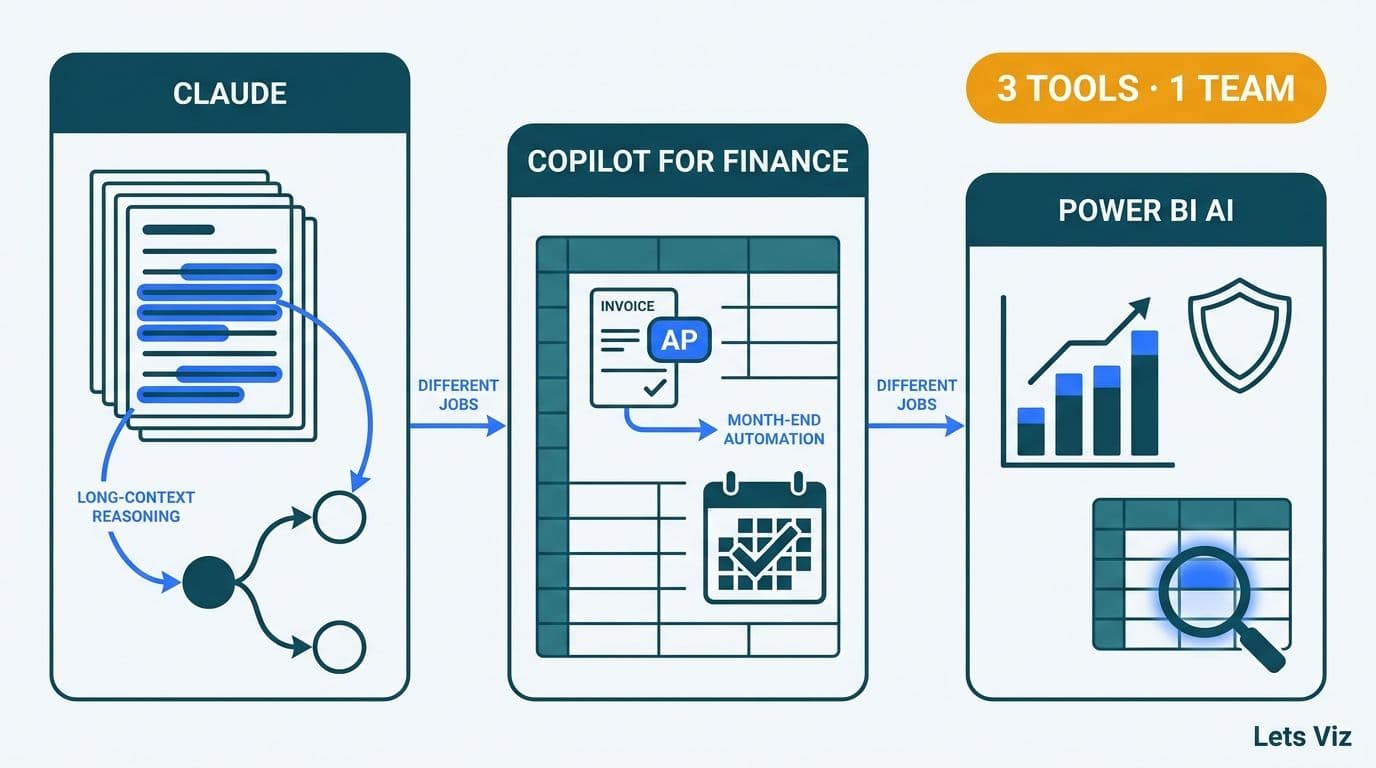
When evaluating the best AI tools for finance professionals - Claude, Microsoft Copilot, and Power BI's native AI - the right choice depends on your specific workflows. Claude excels at long-context document reasoning and scenario analysis. Copilot for Finance embeds directly into Microsoft 365 for accounts payable automation and month-end close support. Power BI's native AI delivers governed, traceable analytics inside your existing BI environment. Most mid-market finance teams deploy all three for different jobs.
Key Takeaways
Claude is the strongest tool for document-heavy tasks: audit prep, FP&A narrative drafting, and unstructured financial analysis
Copilot for Finance automates Excel-based AP workflows, variance commentary, and Teams-embedded reporting
Power BI's native AI - Q&A, Smart Narratives, and Anomaly Detection - operates inside a governed data layer without adding tooling risk
The AI consulting services market is forecast to reach USD 90.99 billion by 2035 (Future Market Insights, 2025), reflecting rapid enterprise adoption across financial services
Mid-market firms see fastest ROI from AI accounts payable automation and automating the month-end close process
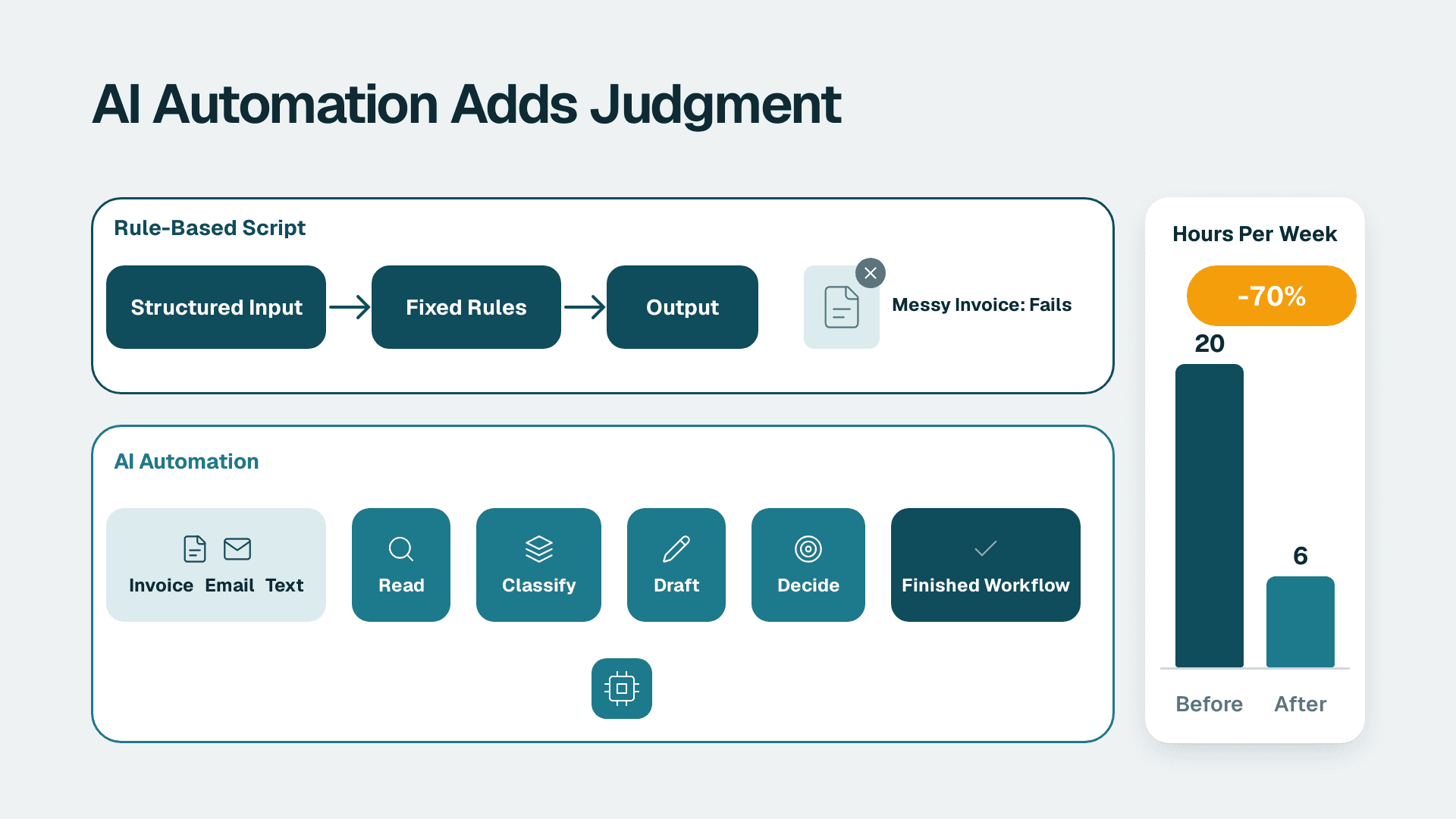
Lets Viz builds custom AI automation solutions that cut manual processing time by 40-60% within 90 days, across finance, healthcare, and operations workflows.
What Makes Finance AI Different From General-Purpose AI?
Finance workflows carry requirements that eliminate most general-purpose AI deployments without modification. Auditability matters: every output needs to be traceable to a source. Data residency matters: financial data containing PII or PHI cannot move to unvetted infrastructure. Regulatory compliance - SOX for public companies, HIPAA for healthcare finance teams - constrains where data can be processed and by whom. Integration matters: a tool that cannot connect to your ERP, GL system, or CRM produces outputs useful for drafts but not for operations.
The three tools in this comparison represent three distinct philosophies. Claude is a conversational AI built for reasoning - it processes documents, synthesizes across sources, and returns structured analysis. Copilot is Microsoft's embedded productivity assistant, designed to work inside the environments finance teams already use daily. Power BI's native AI is a feature layer on top of a governed BI platform, prioritizing traceability and security over conversational flexibility.
According to Future Market Insights (2025), the AI consulting services market is projected to grow from USD 11.07 billion in 2025 to USD 90.99 billion by 2035 at a 26.2% CAGR - with 2026 figures tracking above USD 14 billion as enterprise adoption accelerates - a scale that reflects how aggressively finance teams are being asked to adopt AI, regardless of internal readiness. For healthcare finance teams navigating dual obligations under CMS reimbursement rules and HIPAA technical safeguards, AI analytics for healthcare finance teams covers the compliance layer in detail.
How Does Claude Perform on Finance Workflows?
Claude's defining advantage for finance professionals is long-context document reasoning. It can ingest a 50-page auditor's report, a multi-tab variance model, or a complex vendor contract and return structured, citation-grounded analysis in seconds. This makes it particularly strong for tasks that require synthesizing unstructured text alongside numerical data - a combination that simpler tools cannot handle reliably.
FP&A and Narrative Drafting
Finance analysts use Claude to convert variance tables into board-ready management commentary. Prompt it with a P&L table and a prior-period comparison, and it returns a narrative that explains specific line-item movements, flags outliers, and surfaces questions for the CFO review. The output still requires human approval, but it compresses a two-hour drafting task into under fifteen minutes.
Scenario Modeling and Assumption Translation
Strategic finance teams use Claude to translate plain-English assumptions - "what if gross margin compresses by 200 basis points and headcount grows 10 percent" - into structured model inputs. This bridges the gap between leadership conversations and the spreadsheet builds that finance analysts maintain.
Audit Trail Review
Claude can process reconciliation notes, GL entries, and vendor invoices in bulk to flag inconsistencies that manual review would miss. This is particularly valuable during month-end and quarter-end close cycles where a controller is reviewing hundreds of line items under time pressure.
Where Claude has limits: Claude does not connect natively to live data sources. It cannot pull from a Power BI semantic model or a live CRM dataset without middleware. For finance teams building connected pipelines, Claude functions as the reasoning and drafting layer - not the data integration layer.
Anthropic's dedicated finance agents ship with specific workflow integrations designed to close this gap. Our analysis of what Anthropic's finance agents actually do covers each capability released in 2026 and how they differ from the base model.
How Does Copilot for Finance Perform on Real Workflows?
Microsoft Copilot for Finance is built to eliminate tool-switching. It operates inside Excel, Teams, and Dynamics 365 Finance - the environments where most corporate finance teams already spend their working hours. That native integration is its primary competitive advantage over standalone AI tools.
AI Accounts Payable Automation for Finance Teams
AI accounts payable automation is one of Copilot's strongest use cases. Within Excel, Copilot flags duplicate invoices, auto-matches purchase orders against invoices in AP aging reports, and surfaces exception items for manual review. Finance teams running Dynamics 365 Finance can trigger payment approval workflows directly from Copilot-generated recommendations, reducing the time an AP clerk spends on exception handling by 30-50% in documented mid-market deployments.
How to Automate the Month-End Close Process With AI
For finance teams working through how to automate the month-end close process with AI, Copilot delivers three distinct capabilities:
1. Variance commentary generation: Copilot reads period-over-period tables in Excel and produces initial commentary, which a controller then edits and approves
2. Reconciliation note drafting: For GL accounts with predictable patterns, Copilot drafts reconciliation notes that follow your standard format
3. Journal entry anomaly flagging: Copilot surfaces statistical outliers in journal entry data before close, reducing post-close adjustments
Where Copilot has limits: Copilot's output quality depends entirely on your Microsoft 365 tenant configuration and data structure. Finance teams with data fragmented across disconnected spreadsheets will see limited value. It also requires an M365 Copilot license add-on, adding meaningful per-seat cost at scale.
Our direct comparison of Copilot for Power BI vs Claude on identical finance questions shows exactly where each tool wins and fails on real prompts - essential reading before committing to a licensing decision.
What Does Power BI-Native AI Offer Finance Teams?
Power BI's native AI features are not a chat interface - they are a governed analytics layer. Finance data does not leave your Microsoft tenant. All outputs are traceable to certified datasets. IT and compliance teams retain full visibility and control. This makes Power BI AI the appropriate choice for finance teams where governance is non-negotiable.
The core native AI features include:
Q&A: Finance users type natural-language questions - "show gross margin by business unit for Q2 2026" - and Power BI returns a dynamic visual from the certified data model
Smart Narratives: Auto-generated text summaries that update dynamically as filters change, useful for board pack snapshots and executive briefings
Anomaly Detection: Flags statistical outliers in financial time-series data automatically, with AI-generated explanations for each flagged point
Copilot in Microsoft Fabric: Allows conversational interaction with semantic models built in Fabric, particularly relevant for teams on a medallion architecture
For teams building in Microsoft Fabric, the structure of your data model determines the quality of every AI output. Our guide to medallion architecture in Microsoft Fabric walks through how to build the Bronze-to-Gold pipeline that makes AI features meaningful rather than noisy.
Healthcare finance teams carry an additional governance layer: Power BI reports containing protected health information must meet HIPAA technical safeguard requirements before AI features are enabled on sensitive datasets. Our HIPAA-compliant analytics dashboard checklist covers the specific controls required before you switch on Q&A or Smart Narratives for clinical finance data.
Best AI Tools for Finance Professionals Compared: Side-by-Side
The table below maps each tool against the criteria that matter most to mid-market finance and healthcare finance teams - governance, integration depth, task coverage, and total cost of ownership.
| Capability | Claude | Copilot for Finance | Power BI Native AI |
|---|---|---|---|
| Document analysis | Excellent | Limited | None |
| Live data connectivity | Via middleware | Native (M365/D365) | Native (Power BI datasets) |
| AP automation | Via workflow pipeline | Built-in | Anomaly flagging only |
| Month-end close support | Narrative drafting | Variance commentary | Smart Narratives |
| Data governance | Configurable | Microsoft tenant | Full BI governance |
| HIPAA/SOX suitability | Configurable | Configurable | Strong (governed layer) |
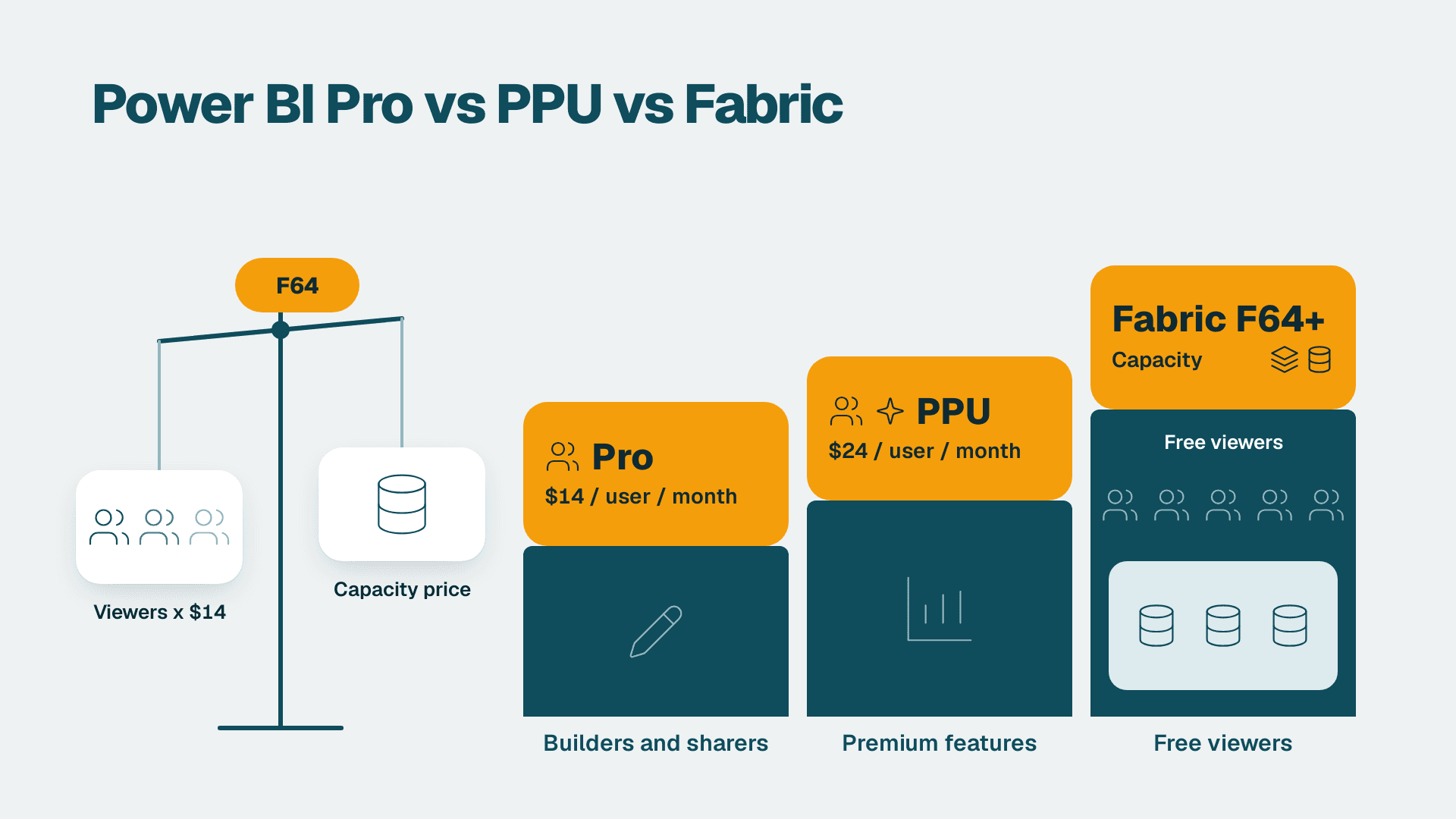
| Licensing model | Per-seat or API | M365 Copilot add-on | Included in Power BI Premium |
| Best fit | FP&A, audit, analysis | Excel/Teams workflows | BI-embedded analytics |
Market Research Future (2025) projects the Healthcare Financial Analytics Market to grow at an 8.58% CAGR from 2026 to 2035 - a trend that reinforces Power BI's governance strengths as healthcare CFOs prioritise compliant, auditable AI analytics over conversational convenience.
For a detailed breakdown of what Power BI implementation costs at mid-market scale, see our Power BI consulting cost guide for 2026.
What Finance Tasks Cannot Be Automated With AI?
Understanding what finance tasks cannot be automated with AI is as strategically important as knowing what can be. No current AI tool - Claude, Copilot, or Power BI native AI - can reliably do the following:
Regulatory judgment calls: Decisions requiring auditor sign-off, board approval, legal interpretation, or SEC comment letter responses cannot be delegated to AI. These require professional accountability and liability.
Fiduciary responsibility: AI can surface a cash flow stress scenario, but a CFO or controller must own the decision and the communication to the board.
Novel edge-case reasoning: AI models trained on historical patterns fail on genuinely unprecedented scenarios - a first-ever covenant breach, a novel M&A structure, or a new regulatory classification with no established precedent.
Cross-system data integrity: If your ERP, CRM, and spreadsheets are not reconciled at source, AI will generate confident, incorrect outputs. AI does not fix bad data - it amplifies it.
Human-in-the-loop architecture is not a limitation to work around - it is the appropriate design for finance AI. The model handles pattern recognition, first-draft generation, and anomaly flagging. Finance professionals apply judgment, approve outputs, and sign off on every material item.
Our CFO's AI risk checklist for Power BI covers the six governance questions auditors are asking in 2026 before approving AI-generated outputs in financial statements.
What AI Skills Do Finance Professionals Need?
Deploying the right tools is only half the equation. The AI skills finance professionals need in 2026 fall into three distinct competency layers - prompt engineering, data literacy, and model evaluation - and the priority order differs meaningfully by role. Organisations that invest in these skills before rolling out AI into core workflows see faster adoption and far fewer post-deployment corrections.
Finance Analyst: Prompt Engineering First
Analysts see the highest immediate return from structured prompt engineering. The core skill is writing constraint-bound prompts: specifying the output format, anchoring the model to a defined time period, and explicitly stating what the model should not infer. A well-constructed variance commentary prompt includes the reporting period, the prior-period baseline, a materiality threshold for flagging, and the target audience (management brief versus board narrative). Analysts who develop this skill compress two-hour drafting tasks to under fifteen minutes. Data literacy at this level means understanding what a semantic model actually contains before querying it with natural language - knowing which measures are certified, which are calculated fields, and where approximations enter the data pipeline.
FP&A Manager: Model Evaluation Becomes Critical
At the FP&A manager level, model evaluation is the highest-impact competency. Managers now sit between AI-generated outputs and CFO or board review, which means they need a working understanding of where language models fail: pattern-matching from training data rather than first-principles reasoning makes models most likely to break on novel scenarios, multi-step conditional logic, and edge cases with no historical analogue. FP&A managers also need enough data literacy to assess whether the underlying dataset is fit for the question being asked - an AI-generated forecast is only as reliable as the certified model it draws from.
CFO: Governance Literacy Over Operational Fluency
CFOs require less hands-on AI fluency and more governance literacy: the ability to evaluate AI risk frameworks, assess vendor data residency commitments, and set organisational policy on where AI-generated outputs require mandatory human sign-off. The most consequential CFO competency in 2026 is strategic model evaluation - asking the right questions about auditability, liability, and regulatory exposure before a tool is deployed at scale across the finance function.
The sequencing matters: organisations that build analyst-level prompt skills before extending AI into FP&A and CFO workflows see cleaner adoption, because the people producing AI-assisted outputs already understand the failure modes before senior leadership is reviewing them.
Build vs Buy Finance Automation for Mid-Market Companies
The build vs buy finance automation decision for mid-market companies has shifted significantly. In 2023, "build" meant expensive custom software development with long lead times. Today, it often means assembling no-code and low-code tools - n8n, Microsoft Power Automate, or Zapier - around existing AI APIs, typically in weeks rather than quarters.
n8n Finance Workflow Automation Examples
n8n finance workflow automation is gaining traction among mid-market controllers who want automation without enterprise licensing overhead. Practical patterns include:
Invoice ingestion pipeline: PDF invoices arrive by email, n8n routes them to an OCR service, Claude extracts and structures line items, and data writes to an ERP or spreadsheet for controller review — mid-market finance teams running this pattern report processing times dropping from 4-6 minutes per invoice to under 45 seconds, with exception rates falling below 5% after the first 30 days of production use
AP approval routing: n8n monitors an AP aging threshold, triggers a Teams notification when invoices exceed payment terms, and logs approvals in the CRM
Month-end checklist automation: n8n polls a close checklist at scheduled intervals, sends reminders to task owners, and updates a Power BI dashboard when steps complete
CRM and Finance Workflow Integration
For teams running Zoho CRM alongside finance systems, following a sound Zoho CRM workflow automation setup guide is essential before connecting CRM revenue data to finance pipelines. Knowing how to import and map data in Zoho CRM correctly - field mapping, duplicate handling, and record association rules - determines whether your automation receives reliable revenue data or noise. Zoho CRM implementation cost for mid-market companies typically ranges from USD 15,000 to USD 60,000 depending on customization depth and data migration scope. Our comparison of Zoho CRM vs Bigin for small business shows where cost lines and feature sets diverge by company size.
MedInsight (2025) identified AI-driven analytics as one of three dominant themes in healthcare finance transformation throughout 2025 — a trend that has continued to accelerate into 2026 as AI-assisted FP&A and revenue cycle management move from pilot to production across regional health systems — a signal that even organizations with strong internal IT capability are accelerating toward the integrate-and-extend path rather than pure custom builds.
Our full framework for building an AI analytics strategy for a mid-market company walks through the build vs buy decision in structured detail, including when internal capacity justifies a custom approach.
Ready to deploy AI across your finance or healthcare finance workflows without starting from scratch? Custom AI automation and consulting - our team designs, builds, and manages AI-augmented finance pipelines for mid-market firms in financial services and healthcare.
---
About Lets Viz: Lets Viz has delivered data analytics and AI consulting to financial services and healthcare organizations since 2020. Our team holds certifications in Microsoft Fabric, Power BI, and Zoho CRM implementations, and has designed AI-augmented finance workflows for clients ranging from regional health systems to mid-market investment firms. We build for auditability, data governance, and measurable ROI - not just tool deployment.