AI Automation for SMEs in India, UK & US | Growth & Efficiency
TLDR
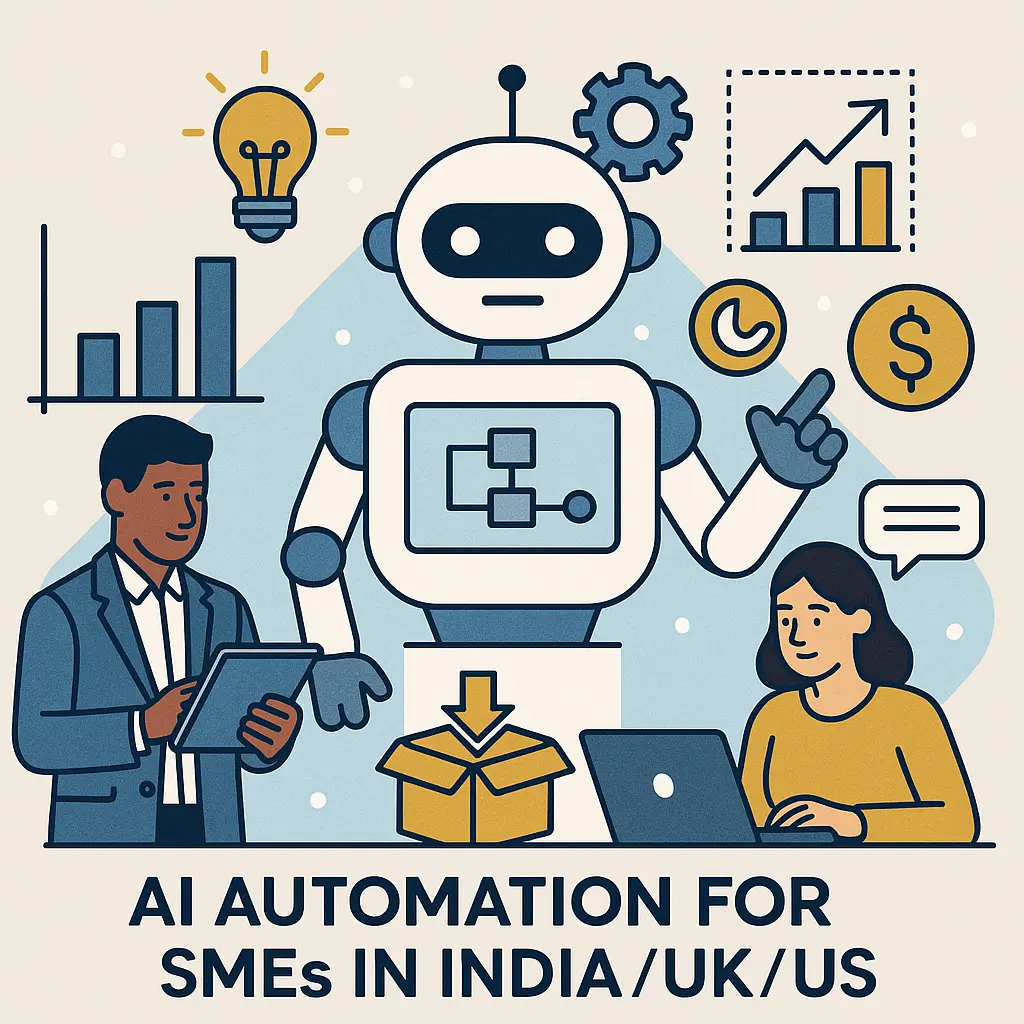
AI automation for SMEs is about using artificial intelligence tools to handle repetitive, time-consuming, or complex tasks that traditionally required human effort. In India, the UK, and the US, small and medium-sized enterprises are increasingly adopting AI-powered automation to cut costs, speed up workflows, and compete with larger companies. The most common areas where AI automation helps SMEs include customer support (chatbots, virtual assistants), marketing (AI-driven campaigns, personalization), finance (automated invoicing, fraud detection), and operations (supply chain forecasting, workflow automation).
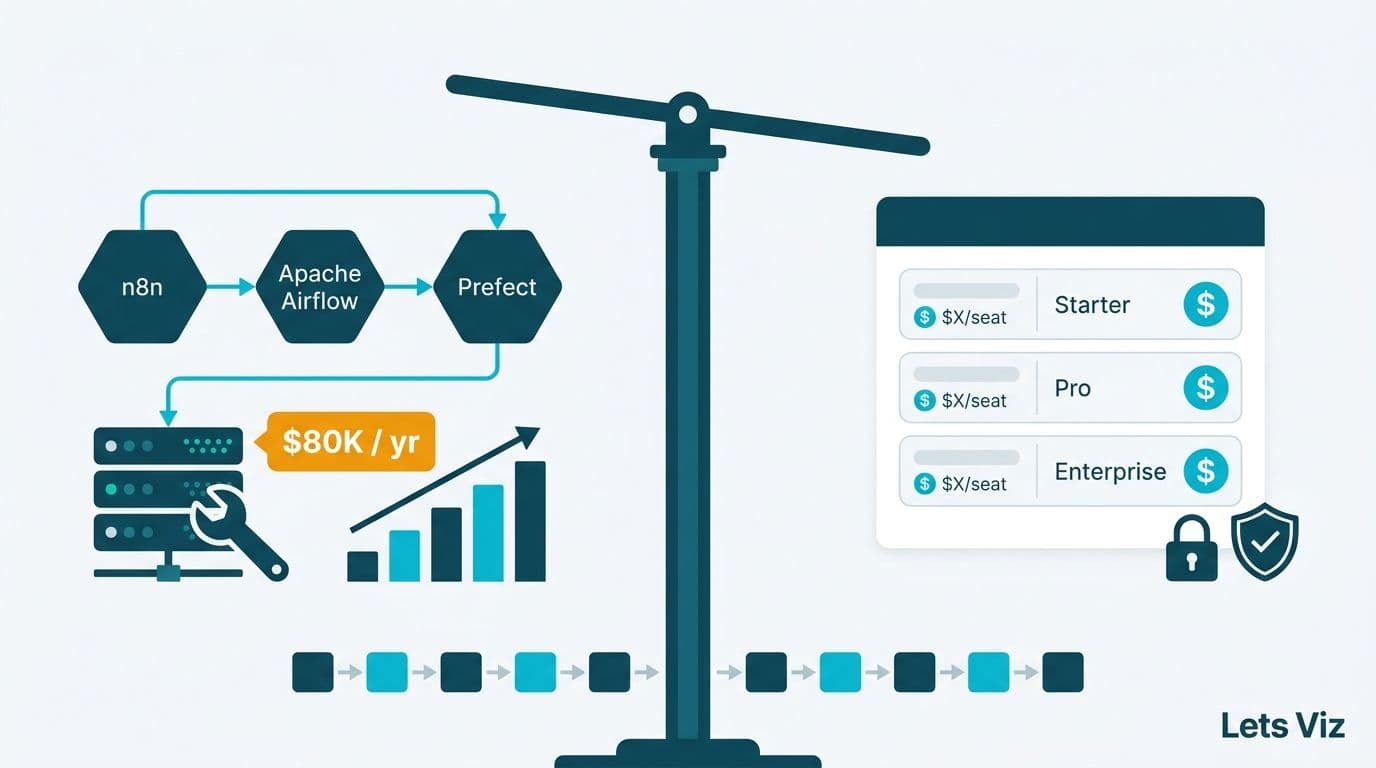
The advantage for SMEs is twofold: first, automation reduces manual errors and operational inefficiencies; second, AI provides insights that were previously available only to enterprises with big data teams. Whether it’s an SME in India streamlining back-office processes, a UK-based retailer personalizing online shopping experiences, or a US healthcare SME improving patient engagement, AI automation levels the playing field globally. With cloud-based, affordable platforms, SMEs no longer need large IT budgets to implement smart solutions. Instead, they can adopt tools like n8n, Zapier, or Make.com for workflow automation, or AI-driven dashboards for business intelligence.
In short: AI automation allows SMEs to do more with less, compete smarter, and future-proof their operations in fast-changing markets. For business owners, it’s less about “should we use AI” and more about “how fast can we implement it.”
Why SMEs Need AI Automation Now?
Small and medium-sized enterprises (SMEs) form the backbone of economies in India, the UK, and the US. However, SMEs often face three challenges: limited resources, rising operational costs, and increasing competition from both local players and global corporations. AI automation provides a solution by helping SMEs achieve enterprise-level efficiency without requiring enterprise-level budgets. According to a McKinsey report, automation could raise global productivity growth by 0.8 to 1.4 percent annually (McKinsey). For SMEs, that can mean the difference between stagnation and growth.
In this blog, we explore how SMEs in India, the UK, and the US can leverage AI automation to boost productivity, cut costs, and scale operations. We’ll cover real-world use cases, tools, adoption challenges, and strategies to get started.
How does AI automation work for SMEs?
AI automation combines artificial intelligence (AI) with workflow automation tools to streamline tasks. For SMEs, this typically involves:
- Customer-facing automation: AI chatbots, automated FAQs, and AI-powered call routing.
- Marketing automation: Personalized email campaigns, predictive lead scoring, and automated content generation.
- Finance automation: Automated bookkeeping, invoice processing, and fraud detection.
- Operations automation: Supply chain predictions, scheduling, and logistics optimization.
- Decision-making support: AI-powered dashboards and forecasting models.
Instead of replacing employees, AI automation augments them. For example, an AI assistant can handle 80% of customer queries, leaving staff free to solve complex cases.
Why AI automation matters for SMEs in India, UK, and US
India
SMEs in India contribute nearly 30% to the nation’s GDP and employ over 110 million people (Statista, 2024). However, they struggle with manual processes, compliance burdens, and resource constraints. Affordable AI automation helps Indian SMEs improve efficiency and compliance while scaling digitally.
United Kingdom
UK SMEs face rising costs, regulatory complexity (like post-Brexit trade rules), and a competitive digital marketplace. AI automation empowers them to optimize workflows, personalize customer experiences, and stay lean.
United States
SMEs in the US are highly competitive but often overwhelmed by labor costs and market saturation. AI automation allows them to stay agile, scale fast, and offer enterprise-level services without needing enterprise-level resources.
Key Use Cases of AI Automation for SMEs
1. Customer Support Automation
- AI chatbots handle FAQs and common support tickets.
- Sentiment analysis helps SMEs prioritize urgent cases.
- Virtual assistants improve 24/7 customer availability.
2. Marketing Automation
- AI-driven customer segmentation and targeting.
- Automated social media scheduling and engagement.
- Predictive analytics for lead generation.
👉 Explore more in our guide on AI prompts for business research.
3. Finance & Accounting Automation
- Automated invoicing and payment reminders.
- Fraud detection using AI-powered anomaly detection.
- AI-assisted forecasting for cash flow management.
4. Operations & Workflow Automation
- Smart scheduling of tasks.
- AI-enabled demand forecasting.
- Workflow automation platforms like n8n, Zapier, and Make.
5. Business Intelligence Automation
- AI-powered dashboards for real-time decision-making.
- KPI tracking across sales, marketing, and finance.
- Predictive insights for growth strategies.
👉 See examples in our marketing dashboard templates.
Case Study Snapshots
- India: A logistics SME used AI-powered demand forecasting to cut fuel costs by 18%.
- UK: An e-commerce SME deployed AI chatbots, reducing support response time by 65%.
- US: A healthcare SME automated patient appointment scheduling, freeing up 20 hours per week of admin time.
How SMEs Can Get Started with AI Automation
- Identify pain points: Start with repetitive, time-heavy tasks.
- Choose the right tools: Affordable platforms like n8n, Make, or Zoho AI can help.
- Pilot with one process: Start small (e.g., automate invoices).
- Measure impact: Track savings, time efficiency, and ROI.
- Scale gradually: Expand automation to marketing, HR, or operations.
Adoption Challenges for SMEs
- Cost concerns: SMEs fear high investment, but SaaS automation platforms reduce entry barriers.
- Skills gap: Employees may resist or lack knowledge of AI.
- Integration issues: Legacy systems can slow down automation adoption.
- Data security: SMEs must ensure compliance with data laws like GDPR.
Framework: SME AI Automation Roadmap
- Awareness – Understand automation opportunities.
- Assessment – Identify ROI-positive areas.
- Pilot – Implement in one department.
- Scale – Expand across business units.
- Optimize – Use analytics to refine.
Start with small, repetitive tasks like invoicing, scheduling, or email marketing. Use affordable tools like n8n or Make before moving to advanced AI systems.
Not anymore. Cloud-based platforms have made AI automation affordable with subscription models, allowing SMEs to pay only for what they use.
No. AI automation augments employees by handling repetitive tasks, freeing them for higher-value work.
Popular options include n8n, Zapier, Make.com, Zoho AI, and HubSpot for marketing automation.
Security depends on the provider. Choose platforms compliant with GDPR, HIPAA, or relevant standards.
Yes. Indian SMEs focus on compliance and scalability, while UK SMEs prioritize cost optimization, and US SMEs adopt AI to stay competitive.
ROI varies but SMEs often report 20–40% efficiency improvements and significant cost savings within the first year.