From Boolean to Brilliant: My Journey with Automation, AI, and the Rise of AI Agents on Make.com
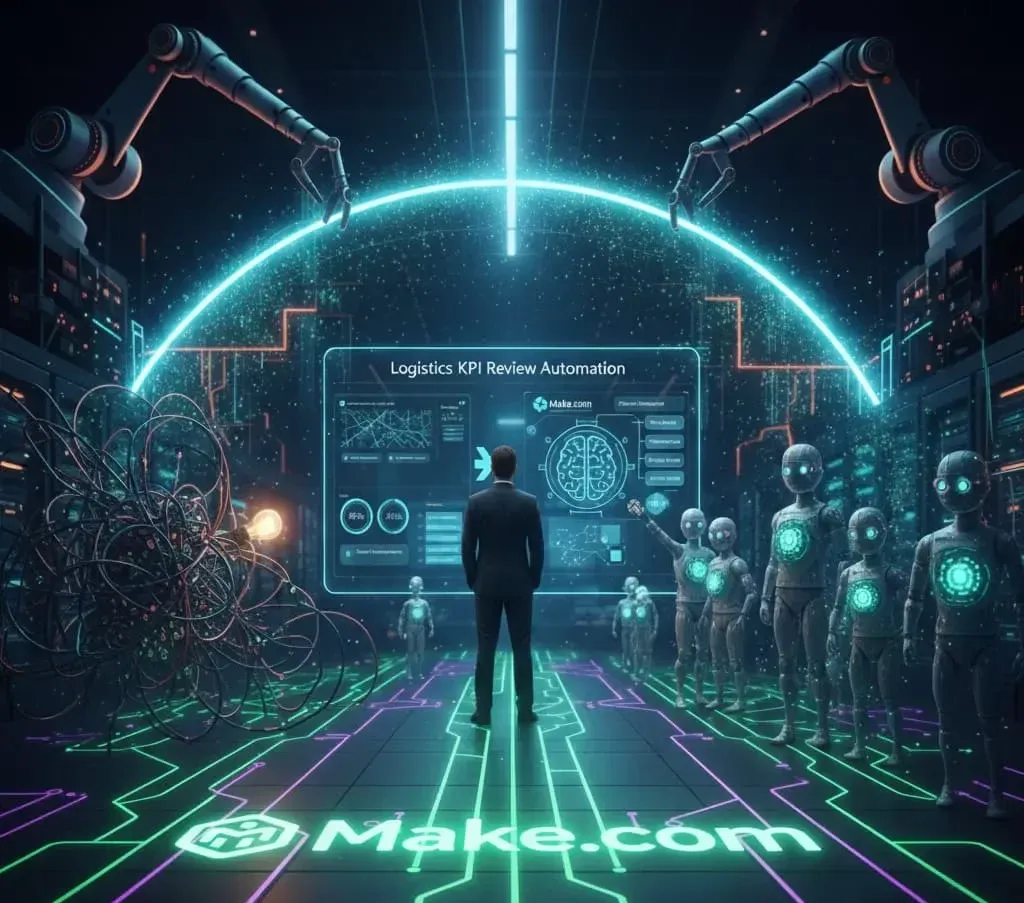
You’ve probably heard the buzz about AI agents. Maybe you’ve even wondered if they’re just another shiny new toy, or if they’re the real deal. As someone who’s spent countless hours building workflows and unraveling the complexities of automation, I can tell you this: AI agents are a game-changer.
But here’s the thing—they’re not a replacement for everything that came before. Instead, they’re the next step in a fascinating evolution. I’ve been on this journey from the very beginning, and I want to share what I’ve learned about the three types of automation. This isn’t just theory; it’s about knowing when to use the right tool for the job to achieve your goals, and how platforms like Make.com are making it all possible.
The Automation Family: Traditional, AI, and Agentic
Think of automation as a family with three distinct members. Each has its own strengths, personality, and ideal use cases.
1. Traditional Automation: The Reliable Rule-Follower
This is the classic automation we all know and love—the foundation of platforms like Make.com. It’s a workflow that follows a fixed set of rules. No surprises, no exceptions. It’s the dependable team member who always does exactly what you ask, every single time.

How it works: This type of automation is built on Boolean logic. It’s all about “if this, then that.” If a new email arrives, save the attachment to Google Drive. If a new person signs up on your website, send them a welcome message. It’s deterministic, meaning the same input will always produce the same, predictable outcome. My go-to example is “Eddie the Evidence Logger,” a simple, reliable system that logs evidence into a fixed template. Eddie doesn’t ask questions or make judgment calls; he just follows the rules.
When I use it: Traditional automation is perfect for tasks that are repetitive, simple, and don’t change. It’s fast, reliable, and incredibly efficient for things like data entry, scheduled reports, and basic notifications.
2. AI Automation: The Smart, Task-Specific Assistant
Next, we have AI automation. This is where we bring generative AI into the mix. It’s still a predefined workflow, but now we’ve added a layer of intelligence to a specific step. It’s like giving your reliable team member a powerful, AI-powered tool to handle a tough part of their job.

How it works: AI automation uses both Boolean logic for its overall structure and fuzzy logic for the AI-enhanced part. The fuzzy logic allows it to handle ambiguity and nuance. For example, instead of just sending an email, it can review a customer message and classify it as “urgent” or “billing question,” then route it to the right person. My imaginary assistant, “Ingrid the Interview Assistant,” helps a detective by not only providing basic questions but also suggesting new, tailored questions based on a suspect’s profile. It’s an improvement, but it’s still part of a larger, pre-planned scenario.
When I use it: I turn to AI automation for tasks that are mostly rule-based but require a bit of smart decision-making. It’s great for customer support triage, analyzing text for sentiment, or generating a summary from a long document.
3. Agentic Automation: The Autonomous Problem-Solver
This is where things get truly exciting. Agentic automation is powered by AI agents that can make their own decisions, adapt to changing situations, and figure out the best way to reach a goal—all on their own. You don’t define every step; you just define the goal.

How it works: This is where fuzzy logic truly shines. The AI agent doesn’t follow a rigid path. Instead, it takes in new information, reasons about the situation, and dynamically decides what to do next. It’s like my detective, “Derek.” He doesn’t just follow a fixed set of questions; he investigates every new clue, changing his approach on the fly to get to the bottom of the case. He’s proactive and adaptable.
When I use it: Agentic automation is what I use for tasks that are complex, unpredictable, and require human-like reasoning. This is for those situations where you simply can’t plan for every single scenario.
Unlocking the Power of Agentic Automation on Make.com
In practice, what does this look like? On Make.com, I can use an AI agent to handle some of the most challenging tasks in my business.
Handling complex, unpredictable requests: Imagine a sales agent that can research a prospect by looking up their company, finding their social media profiles, and then writing a personalized outreach email. It’s not a single, linear process; the agent adjusts its steps based on the information it finds.
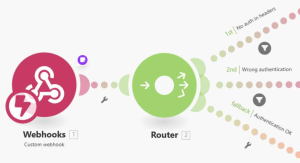
Working with unstructured data: I no longer have to build a complex, rigid workflow just to extract information from a PDF. An AI agent can interpret a messy invoice, pull out the key details, and then route it for payment, even if the layout is different every time.
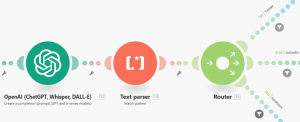
Making real-time decisions: In a fast-moving marketing campaign, an AI agent could monitor social media mentions, analyze sentiment, and decide how to respond to a customer complaint, all without me having to manually intervene.

The beauty of Make.com is how it brings these three types of automation together. I can define a goal for an AI agent, and it can then use my existing Make scenarios as “tools” to get the job done. It’s the perfect combination of dynamic, goal-oriented intelligence and the powerful integrations I already rely on.
My Final Takeaway
We’ve moved from a world of deterministic, rule-based workflows to one where we can build systems that adapt and reason. Traditional automation is still the best for simple, repeatable tasks. AI automation improves upon that by adding a layer of intelligence to specific steps. But agentic automation is the future for tackling the unpredictable, complex challenges that previously required constant human oversight.
I’ve learned that the key isn’t to choose one over the other, but to understand when to use each approach to create a smarter, more resilient, and more powerful business. The ability to define a goal and let an AI agent dynamically figure out the path is a massive leap forward. For me, it’s not just about saving time; it’s about unlocking a whole new level of possibility.
Ready to start building? Sign up for Make.com today and discover the power of agentic automation for yourself.
📩 Contact us today to schedule a free consultation and see how automation can help you keep more customers, protect revenue, and grow stronger.
Check out other helpful Power Automate Blogs

If you are looking forward to getting your data pipeline built and setting up the dashboard for business intelligence, book a call now from get in touch with our Make.com experts.
#analytics #data #business #artificialintelligence #machinelearning #startup #deeplearning #deeplearning #datascience #ai #growth #dataanalytics #india #datascientist #powerbi #dataanalysis #businessanalytics #businessanalyst #businessandmanagement #dataanalyst #businessanalysis #analyst #analysis #powerbideveloper #powerbidesktop #letsviz