AI Analytics Consulting -- AI Built Into Your BI Stack, Not Bolted On
We layer AI and LLM capabilities on top of your Power BI, Looker, or data stack. Predictive models, Copilot integration, and AI-ready data pipelines -- for finance and healthcare teams that want AI informing decisions, not replacing analysts.
Trusted by teams across 15+ countries
AI analytics that earns its place in your BI stack
Driving measurable success through data. We help our clients achieve improved KPIs, operational efficiency, and tangible business outcomes.
5+
AI analytics features shipped
2-3 wks
prototype to production
$8-12K
audit + prototype engagement
5.0 Star
rating from 15 reviews
Why most AI analytics projects don't make it into production
The models work in a notebook. They don't make it into the dashboard your team actually uses.
The problem
You have BI dashboards but no AI layer on top
Your Power BI shows what happened — but not what's anomalous, trending wrong, or likely next
Most BI environments were built to organize and display historical data. Adding AI capabilities — anomaly detection, predictive models, LLM-generated commentary — requires a different build pattern on top of the existing semantic model. That's the gap we fill.
The problem
AI models built in notebooks, not in production dashboards
A data scientist built a churn model six months ago — no one uses it because it never made it into the dashboard
Jupyter notebooks and Python scripts can run a model. Getting that model into a live Power BI tile, with monitoring, retraining, and access controls, requires productionization work most data science teams don't have capacity for. We close that gap.
The problem
The CFO wants Copilot but the data model isn't ready for it
Power BI Copilot requires a structured semantic model with clean measures and documented relationships — most aren't
Copilot is impressive in demos. In practice, it fails on messy data models — wrong measure names, undocumented relationships, missing descriptions. We prepare your semantic model for Copilot before enabling it, so the first question your CFO asks gets a useful answer.
AI analytics built for the verticals where data quality matters most
How do we flag financial anomalies before the board meeting, not after?
We embed Azure Anomaly Detector or custom ARIMA models directly in your Power BI financial dashboards — variance outliers surface as flagged tiles before your CFO opens the report.
We need readmission risk scores in our clinical dashboards without moving PHI
We build ML models that run in Azure (HIPAA-compliant, PHI stays in region), surface risk scores as Power BI tiles in your clinical dashboard, and sign BAAs before any data is touched.
Can we get AI-generated commentary on our campaign performance without rebuilding our stack?
Yes — LLM commentary runs on top of your existing Power BI or Looker reports. GPT-4o or Claude reads your KPI deltas and generates plain-English narrative automatically after each data refresh.
AI Analytics Use Cases We Build
Finance AI -- where it makes the biggest dent
Anomaly detection on financial actuals (flag variance outliers in Power BI before the CFO sees them), AI-generated board narrative (LLM reads KPI deltas, writes plain-English commentary), Copilot natural-language queries (finance team asks "what drove the EBITDA dip in Q3?" and gets a cited answer), cash flow prediction (Azure ML or Fabric model embedded as a live Power BI tile), and FP&A automation (budget vs. actuals with AI-flagged exceptions routed to the right approver).
Healthcare analytics -- AI for payers, providers, and clinical ops
Readmission risk scoring (ML model on discharge diagnoses, LOS, demographics -- surfaced in your clinical Power BI dashboard), claims anomaly detection (flag unusual billing patterns before submission), provider performance benchmarking (AI-normalized case mix index, patient volume, quality metrics), and payer analytics (member risk stratification, prior authorization triage scoring). HIPAA-safe data residency in Azure. Canadian clients use Azure Canada Central (PHIPA, PIPA/FIPPA compliant).
Power BI Copilot and natural language queries
Power BI Copilot, Q&A, and smart narratives are native Microsoft features -- but they require a properly structured semantic model and row-level security to work well. We prepare your data model for Copilot: clean measures, standardized naming, documented relationships, and RLS that doesn't break Copilot's context window. We also configure Azure OpenAI inside Microsoft Fabric for models beyond what Copilot can handle natively.
Marketing analytics AI
LLM-assisted attribution models (multi-touch attribution with AI-generated channel commentary), churn prediction (ML model scoring customer health signals in Snowflake or Databricks, surfaced in Looker or Power BI), and AI-assisted cohort analysis (LLM identifies cohort patterns and generates natural-language summaries of what drove retention or churn in each segment).
AI-ready data pipeline setup
Most AI projects fail because the data isn't ready -- wrong grain, missing history, no labeling. We run a data readiness audit and fix the pipeline upstream: cleaning, grain standardization, feature engineering, and labeling workflows -- so the AI model has quality input before we build anything. Azure Synapse, Databricks, Snowflake, and BigQuery supported.
LLM document and report intelligence
Feed contracts, financial statements, and compliance documents into an LLM and extract structured fields, flag anomalies, or generate summaries -- without sending raw documents to a consumer API. Azure OpenAI inside your tenancy, or an on-premise model for highly regulated data. Common patterns: financial report extraction, contract clause comparison, compliance checklist automation.
We add AI to the BI stack you already have
AI analytics isn't about replacing your Power BI setup -- it's about embedding predictive models, anomaly detection, and LLM commentary directly into the dashboards your team already uses.
AI on top of BI -- not instead of it
We don't rip out your Power BI or Looker setup. We embed AI capabilities directly in your existing semantic model and reports -- Copilot, Q&A, anomaly detection, and LLM commentary as layers on top of what you have.
Finance AI specialists
Anomaly detection on financial actuals, AI-generated board narrative, cash flow prediction, and FP&A automation -- built for CFOs and finance teams at mid-market and SaaS companies.
Healthcare compliance built in
HIPAA, PHIPA, and PIPA/FIPPA-compliant data residency by default. Azure Canada Central for Canadian clients. PHI stays in compliant regions. BAAs signed where required.
Production-grade AI, not notebooks
We don't deliver a Jupyter notebook and leave. Every AI feature we build has monitoring, a retraining schedule, access controls, and stakeholder training. It goes into production, not a proof-of-concept folder.
Azure OpenAI inside your tenancy
We use Azure OpenAI (data not used for model training, stays in your Azure region) or on-premise models for highly sensitive data. We never send raw client data to consumer OpenAI or Claude endpoints.
Audit + prototype before you commit
We run a 1-week audit of your data estate before any build. You get a written assessment of what AI use cases are feasible now vs. 6 months away -- and a fixed price for the prototype -- before any engagement starts.
What you get from an AI analytics consultant vs. building in-house
Consulting partner (Lets Viz)
- Audit + prototype in 3–4 weeks — you see an AI feature working before any long engagement
- Platform-native: we build inside your existing Power BI, Fabric, or Looker environment
- Azure OpenAI inside your tenancy — PHI and financial data never reach consumer endpoints
- Productionization included: monitoring, retraining schedule, and access controls built in
- HIPAA, PHIPA, and financial compliance scoped before any build starts
- Fixed-fee engagements — audit + prototype is $8–12K, no open-ended billing
Staffing agency / body shop
- 6–12 months to hire and ramp a senior ML engineer ($120–180K/year)
- Data scientists build models in notebooks — productionizing into BI takes a different skill set
- No compliance scoping by default — PII and PHI handling is the company's responsibility
- No monitoring or retraining schedule — models drift silently until someone notices wrong predictions
- Azure OpenAI setup inside your tenancy requires Azure experience most data scientists don't have
- Full-time headcount for a function that may need 3–6 months of intensive work, then quarterly updates
Finance vs. healthcare AI analytics — where to start
The highest-ROI starting point depends on your industry and data maturity.
| What matters | RecommendedFinance teams | Healthcare payers | Healthcare providers | Marketing teams |
|---|---|---|---|---|
| Best first AI feature | Anomaly detection on financial actuals | Member risk stratification | Readmission risk scoring | LLM commentary on campaign performance |
| Data requirement | 12+ months of actuals at monthly or daily grain | Claims history + demographics (2+ years) | Discharge records + ICD codes + LOS | Campaign + conversion data (any grain) |
| Compliance layer | SOX, audit trail, data stays in Azure region | HIPAA, BAA, PHI in Azure compliant region | HIPAA, PHIPA (Canada), de-identified preferred | Low — no PII in aggregated campaign data |
| BI platform fit | Power BI + Fabric (native Copilot support) | Power BI or Databricks-native dashboards | Clinical Power BI dashboards + EHR integration | Power BI, Looker, or Tableau (any stack) |
| Time to first value | 3–4 weeks to first anomaly dashboard | 4–6 weeks (compliance scoping adds time) | 5–8 weeks (EHR API access adds time) | 1–2 weeks — fastest AI win available |
| Typical ROI | CFO gets early warnings before board meetings | Earlier intervention on high-risk members | Reduced readmission rate, CMS quality bonus | CFO-ready narrative without analyst hours |
| Primary tool | Azure Anomaly Detector or ARIMA in Fabric | Azure ML or Databricks ML + Power BI | Azure ML + Power BI clinical dashboard | Azure OpenAI or Claude via API + BI layer |
| Risk if data is messy | Moderate — model flags too many or too few | High — PHI handling requires careful scoping | High — EHR data quality is highly variable | Low — LLM commentary degrades gracefully |
Four phases: audit, prototype, productionize, expand
A phased model that reduces risk and delivers a production-ready AI feature before any long-term commitment.
Phase 1 -- Audit (1 week)
We assess your data estate -- quality, grain, latency, and what AI use cases are feasible with what you have today vs. 6 months away. You get a written assessment and a prototype scope before any contract.
Phase 2 -- Prototype (2-3 weeks)
One model or one AI feature, end-to-end, in your environment. Anomaly detection in Power BI, LLM commentary on your actuals, or a cash flow prediction embedded as a live tile. You see it working before the build continues.
Phase 3 -- Productionize (2-4 weeks)
Monitoring, retraining schedule, access controls, and stakeholder training. The prototype becomes a production feature with the same reliability your team expects from your existing dashboards.
Phase 4 -- Expand (retainer)
Add next use cases on a monthly retainer. Monthly model health review -- we flag model drift, stale training data, and emerging accuracy gaps before your team notices them in the numbers.
What does an AI analytics engagement cost?
Phased engagements — you see a working AI feature before committing to full production.
Audit + Prototype
fixed scope
1-week data readiness audit + 2–3 week prototype of one AI feature in your environment. You see it working before deciding to continue.
- Data quality and AI readiness assessment
- Written report: what's feasible now vs. 6 months away
- One AI feature prototyped end-to-end in your environment
- Fixed price — scope locked before any work starts
- Go/no-go decision point after prototype
Full Production Build
fixed scope
Full productionization of 1–3 AI features: monitoring, retraining schedule, access controls, and stakeholder training.
- 1–3 AI features productionized (anomaly detection, prediction, LLM commentary)
- Monitoring and model health dashboard
- Retraining schedule and data drift detection
- Row-level security and access controls configured
- Stakeholder training and documentation
AI Retainer
per month
Monthly model health review, new use cases, and on-call support for production AI features.
- Monthly model health review — drift, accuracy, stale data
- One new AI use case scoped and prototyped per quarter
- On-call support for production AI failures
- Stakeholder questions answered within 1 business day
All prices in USD. ML consulting firms typically charge $200–400/hr for comparable senior AI/ML work. Our fixed-fee model gives you a production-ready AI feature for the cost of 30–60 consultant hours.
Wondering what this would cost you?
Answer a few questions and see an honest price range on screen — no email, no call needed.
See it in action
Real engagements. Documented outcomes.
From Four Systems to One Source of Truth
How a regulated US neurovascular device manufacturer turned siloed ERP and third-party market data into dashboards leadership trusts — with every KPI reconciled to source.
From Attribution Chaos to Marketing Clarity
How a wellness retreat discovered its Facebook ROAS was 70% higher than reported — and why a 27% revenue drop had nothing to do with ad creative.
5 Dashboards on 9 Million Orders
A full replacement of a legacy Looker extension — rebuilt in React + TypeScript with 99% fewer API calls and custom chart rendering.
Questions about AI analytics consulting
Find answers to common questions about our services and process.
Further reading
Guides and insights to help you make an informed decision.
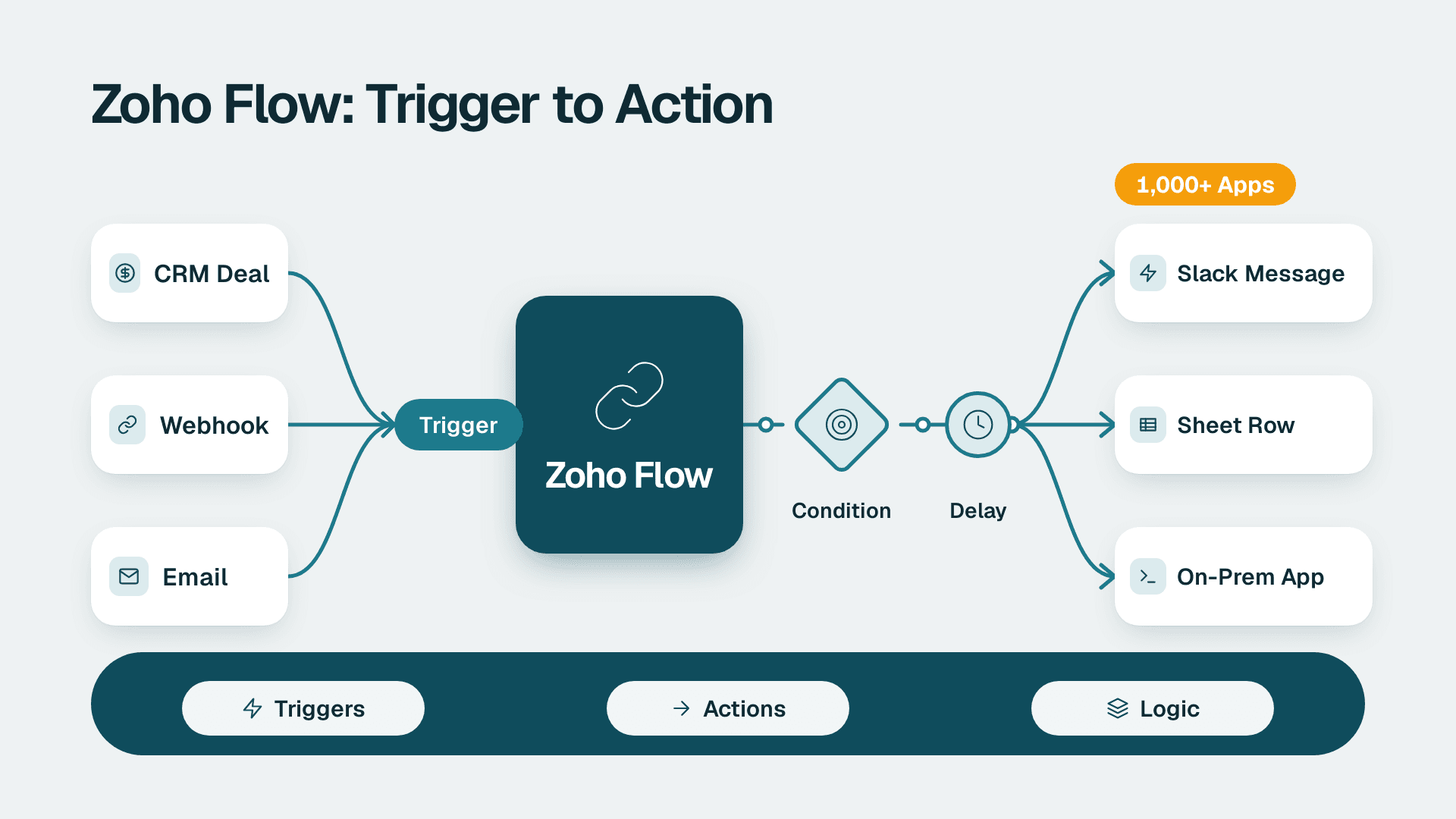
Zoho Flow: How to Automate Work Across Zoho and Other Apps
Zoho Flow connects 1,000+ apps with no-code workflows. Learn what it does, how to build a flow, when Deluge or n8n fits better, and what to check.
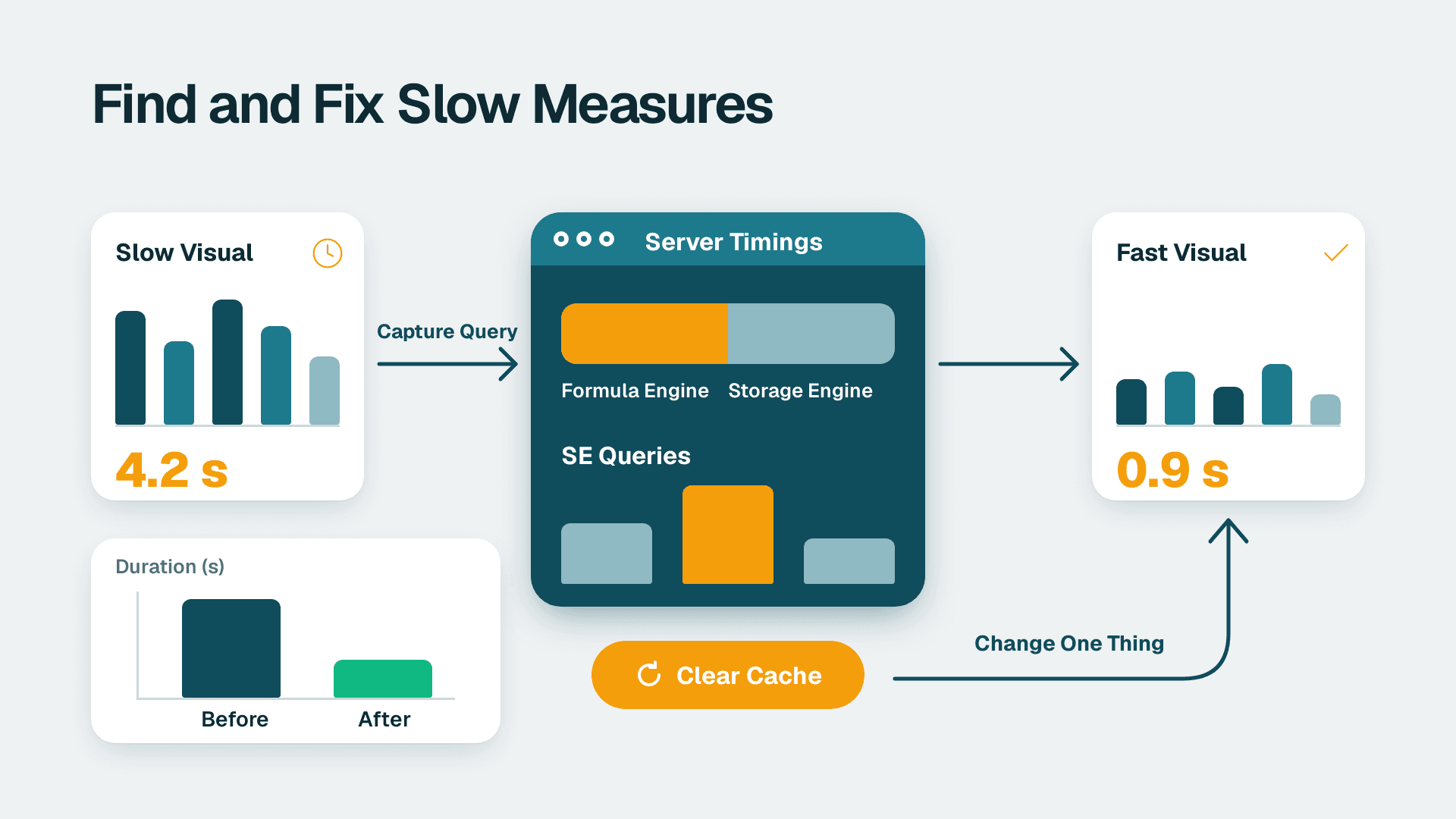
How to Use DAX Studio to Find and Fix Slow Measures
Install DAX Studio, connect to your Power BI model, read Server Timings and benchmark a slow measure. About 45 minutes the first time, 10 after that.
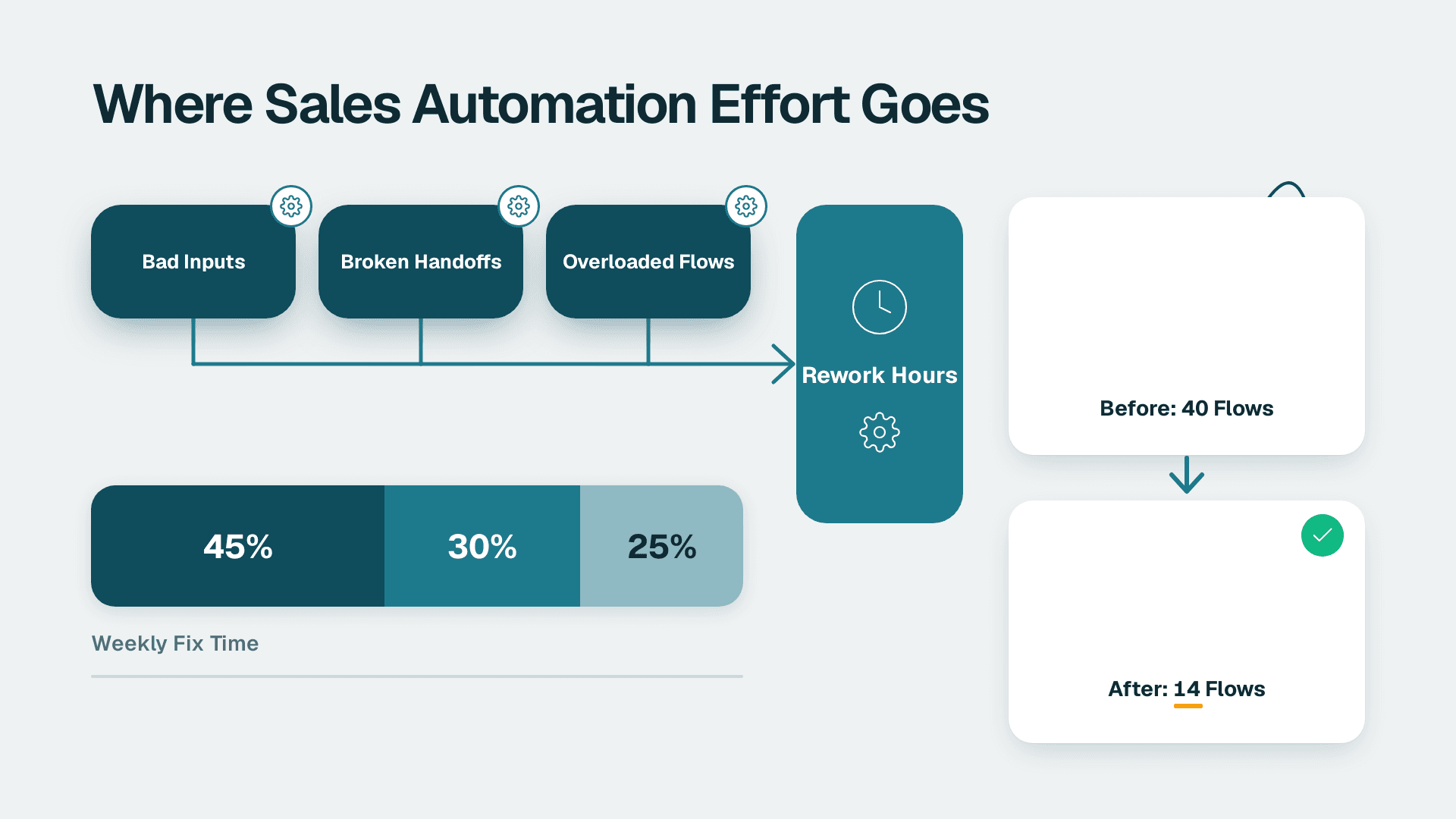
How to Simplify Sales Automation When It Takes Too Much Work
Sales automation eating your week? Diagnose messy CRM data, broken handoffs and over-built flows, then simplify in 7 steps over about two weeks.