Finance Consulting Services That Drive CFO Decisions
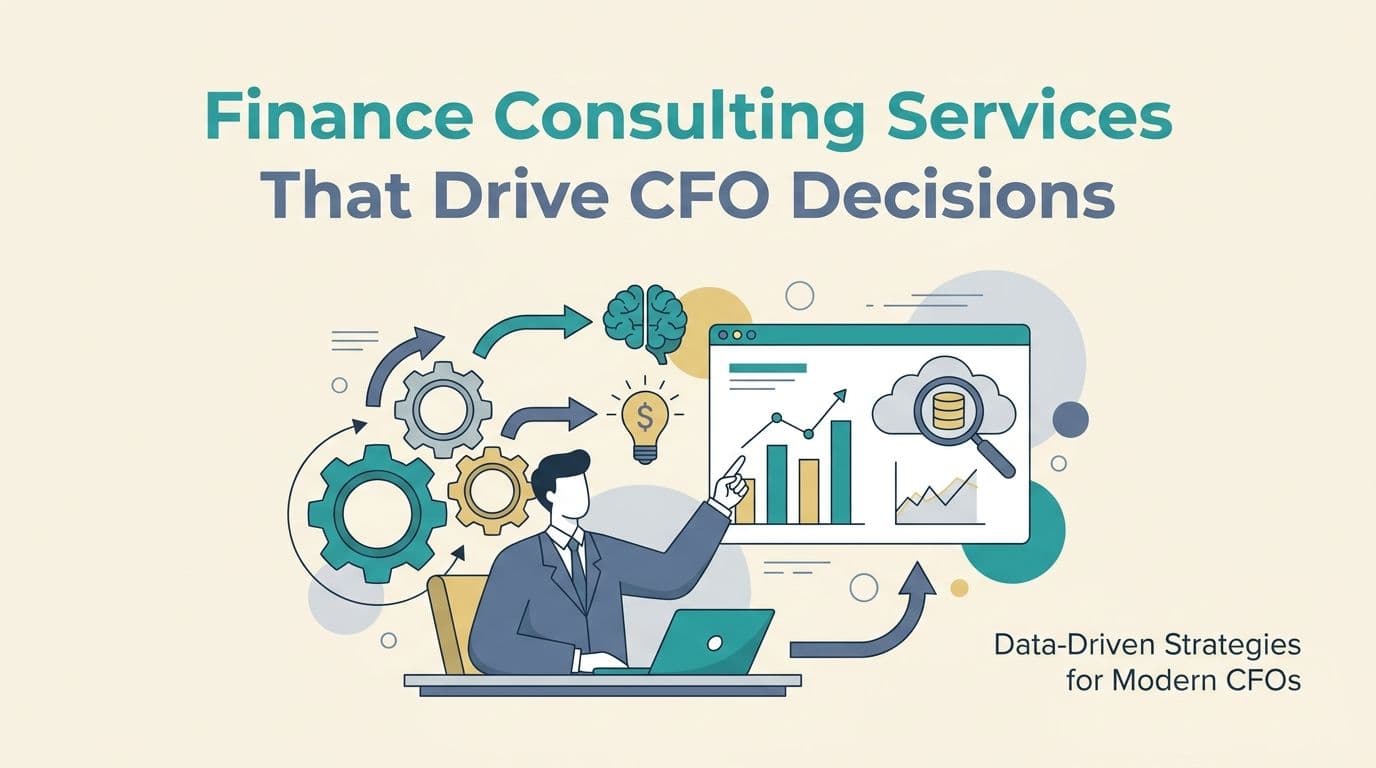
Finance leaders today face a familiar paradox: data volumes have never been larger, yet the gap between raw numbers and actionable insight keeps widening. Finance consulting services have evolved far beyond traditional audit support and tax planning. The most effective engagements now sit at the intersection of financial strategy and data engineering - delivering the real-time visibility that modern CFOs need to steer growth, manage risk, and satisfy auditors.
This guide covers what separates high-performing finance consulting from commodity services, how SaaS and enterprise finance teams are structuring their data stacks, and what to look for in a partner who can accelerate your FP&A function from monthly spreadsheet exports to continuous, boardroom-grade intelligence.
Why Finance Teams Are Rethinking Their Consulting Partners
The traditional consulting model - bring in advisors to close the books and produce a static quarterly deck - no longer fits the pace of modern business. According to a 2024 Gartner survey, 73% of CFOs report that their finance teams spend more than 40% of their time on manual data gathering rather than analysis. That figure climbs higher in mid-market SaaS companies, where headcount is lean and reporting cycles are compressed by investor pressure.
The shift is structural. Boards and investors no longer accept quarterly narratives delivered two weeks after period close. They want rolling forecasts, cohort-level ARR analysis, and burn visibility refreshed in near-real time. A finance consulting partner who still delivers a binder at quarter-end is misaligned with where the profession has moved.
The firms gaining the most value from external engagements are those pairing strategic financial expertise with data infrastructure - cloud data warehouses, semantic layers, and governed reporting pipelines. If your consulting partner cannot speak fluently to your ERP, your CRM, and your cloud data warehouse in the same conversation, they are operating with an incomplete toolkit.
Lets Viz specialises in Power BI for SaaS finance teams -- from MRR waterfall and cohort retention to board-ready financial dashboards.
What High-Impact Finance Consulting Services Deliver
The scope of modern finance consulting extends well beyond reconciliation and compliance. High-impact engagements typically operate across three layers.
Strategic Advisory
Strategic advisory work helps finance leadership translate corporate goals into financial models. For SaaS companies, this means building unit economics frameworks - CAC payback period, LTV:CAC ratio, and net revenue retention cohorts - that are analytically rigorous and board-presentable. For enterprise clients, it often includes capital allocation reviews, M&A due diligence support, and long-range planning methodology.
FP&A Enablement
Financial planning and analysis (FP&A) enablement focuses on the cadence and tooling that finance teams use to run the business. According to the Association for Financial Professionals, companies with mature FP&A practices close their books 3.2 days faster than peers and report significantly higher forecast accuracy. Consulting engagements here typically involve redesigning the budgeting process, building driver-based forecast models, and connecting operational data sources to financial outputs.
Reporting and Compliance Infrastructure
This is where data consulting intersects directly with finance. Building a single source of truth for financial reporting requires integrating data from ERPs (NetSuite, SAP, Microsoft Dynamics 365), billing systems (Stripe, Zuora), CRMs (Salesforce), and HR platforms. The result is a governed, auditable reporting layer that satisfies both operational needs and regulatory requirements.
Modernizing FP&A - From Monthly Exports to Continuous Intelligence
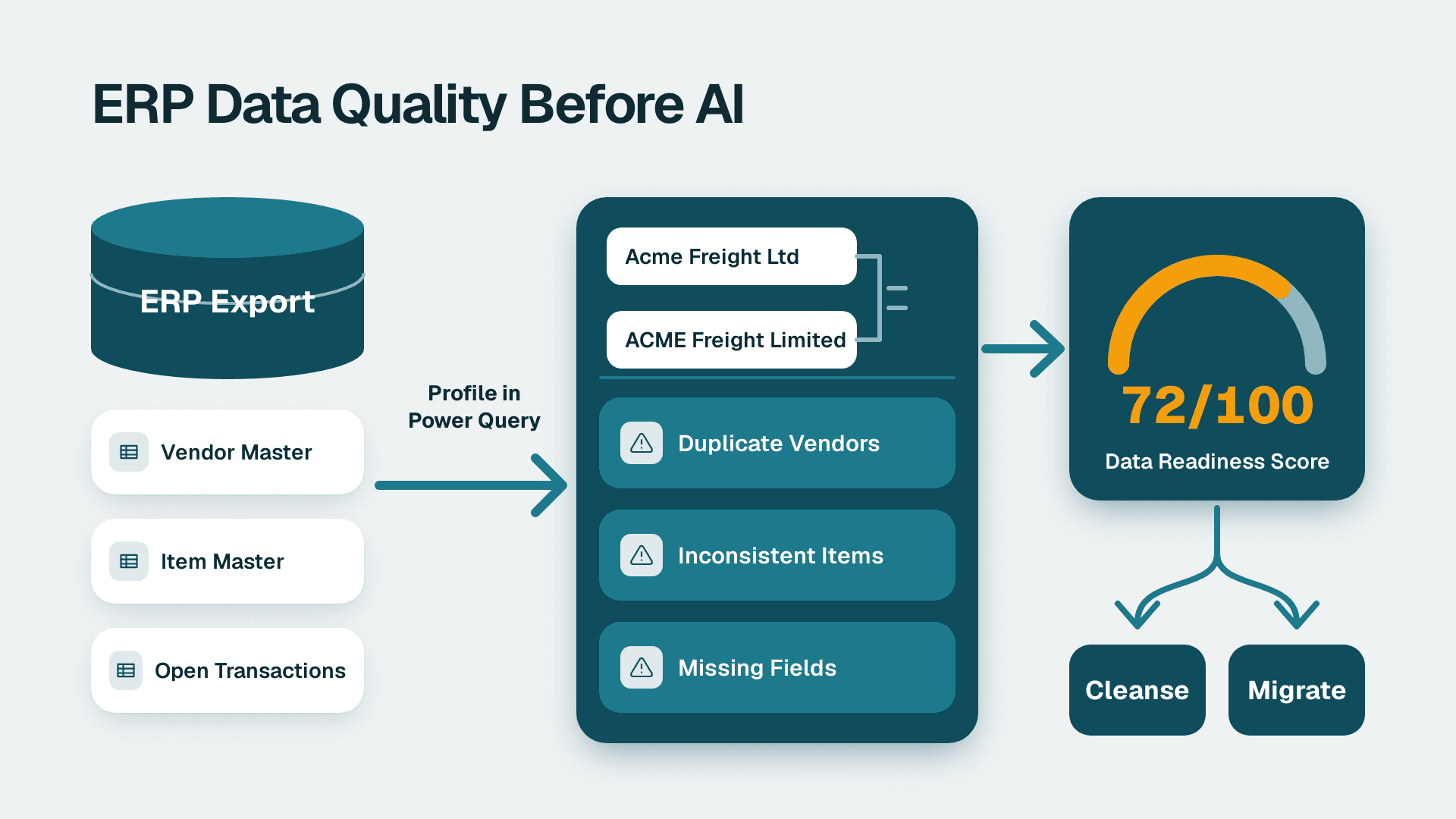
The most common friction point finance leaders describe is the monthly close ritual: pulling data from five systems into a master spreadsheet, normalizing formats, rebuilding pivot tables, and writing commentary for a deck that is already two weeks stale by the time it reaches the board.
The fix is not simply moving to a dashboard tool. The solution requires re-architecting how financial data flows from source systems to decision-ready outputs. A well-structured analytics engagement for an FP&A team typically involves:
1. Data pipeline design - automating extraction from ERP, billing, and payroll systems into a centralized warehouse such as Snowflake, BigQuery, or Redshift
2. Semantic layer modeling - defining financial metrics (gross margin, deferred revenue, headcount cost by department) in a single governed model so every report pulls from the same definition
3. Self-service reporting - deploying interactive dashboards so finance business partners can answer ad-hoc questions without waiting for an analyst
Research from McKinsey found that companies with connected financial data pipelines reduce time-to-insight on financial queries by up to 60% and improve forecast accuracy by as much as 20 percentage points. For a SaaS company managing rapid headcount growth or preparing for an IPO, that delta is material.
The governance layer matters equally. Every metric definition, every data transformation, and every report output should be version-controlled and documented - not because auditors will ask (though they will), but because institutional knowledge embedded in undocumented macros is a liability that surfaces at the worst possible moments.
SOX Compliance and Audit Readiness Without the Overhead
For publicly traded companies and those preparing for a public offering, Sarbanes-Oxley (SOX) compliance shapes almost every conversation about financial reporting infrastructure. SOX Section 302 and 404 requirements demand that CFOs and CEOs certify the accuracy of financial statements and the effectiveness of internal controls over financial reporting (ICFR).
The compliance overhead is substantial. A 2023 Protiviti survey found that mid-size public companies spend an average of $1.9 million annually on SOX compliance activities, with a significant portion attributable to manual testing processes that could be partially automated through modern data controls frameworks.
Finance consulting services with strong data capabilities can materially reduce this burden through:
- Automated control testing - building workflows that continuously monitor journal entry patterns, segregation-of-duties violations, and reconciliation exceptions
- Data lineage documentation - mapping every financial figure in a report back to its source transaction, a capability that external auditors increasingly expect
- Role-based access controls - deploying access governance in the reporting layer that mirrors the controls documented in ICFR narratives
Canadian public companies operating under NI 52-109 - the Canadian Securities Administrators' equivalent of SOX - face structurally identical requirements. The architectural responses are the same: governed pipelines, documented transformations, and auditable access logs.
The guiding principle is control by design rather than control by detection. Embedding data quality checks and access controls into the pipeline architecture is far cheaper and far more defensible during an audit than discovering exceptions after the fact.
How to Choose the Right Finance Consulting Partner
According to Deloitte's 2024 Global CFO Survey, 64% of finance leaders say the quality of deliverable documentation - not just the analysis itself - is a primary factor in whether consulting outcomes are sustained beyond the engagement. Choosing the right partner requires evaluating four dimensions.
Technical and Domain Depth
A credible partner should demonstrate experience with the specific systems in your stack: ERP, billing platform, data warehouse, and BI layer. Ask for examples of engagements where they built or restructured a financial data pipeline, not just delivered a strategic model or a slide deck.
Governance and Documentation Standards
Request samples of data model documentation, metric definitions, and change-management processes. Governance artifacts are where consulting quality is most legible. A partner who cannot produce clean, version-controlled documentation is not equipped for your audit readiness requirements.
Knowledge Transfer
The goal of any engagement should be to build internal capability, not dependency. Dashboards, models, and pipelines delivered at project close should be fully owned and maintained by your internal team. Evaluate whether the partner transfers knowledge actively during the engagement or packages it in ways that require ongoing retainer work to operate.
Track Record With Similar Organizations
A firm with deep SaaS finance experience understands ARR waterfall methodology, deferred revenue accounting under ASC 606, and sales-capacity modeling by default. That baseline accelerates every conversation and reduces the risk of misaligned deliverables.
The most effective finance consulting relationships function as a strategic extension of the finance team - bringing external perspective on best practices while remaining deeply embedded in the client's operating context.
Ready to build a finance analytics stack that gives your CFO real answers in real time? Explore Lets Viz analytics services and see how we work with FP&A and finance leadership teams.