Anthropic just rented Grok's data center. What that tells you about AI infrastructure — and what it means for your finance team's AI bets.
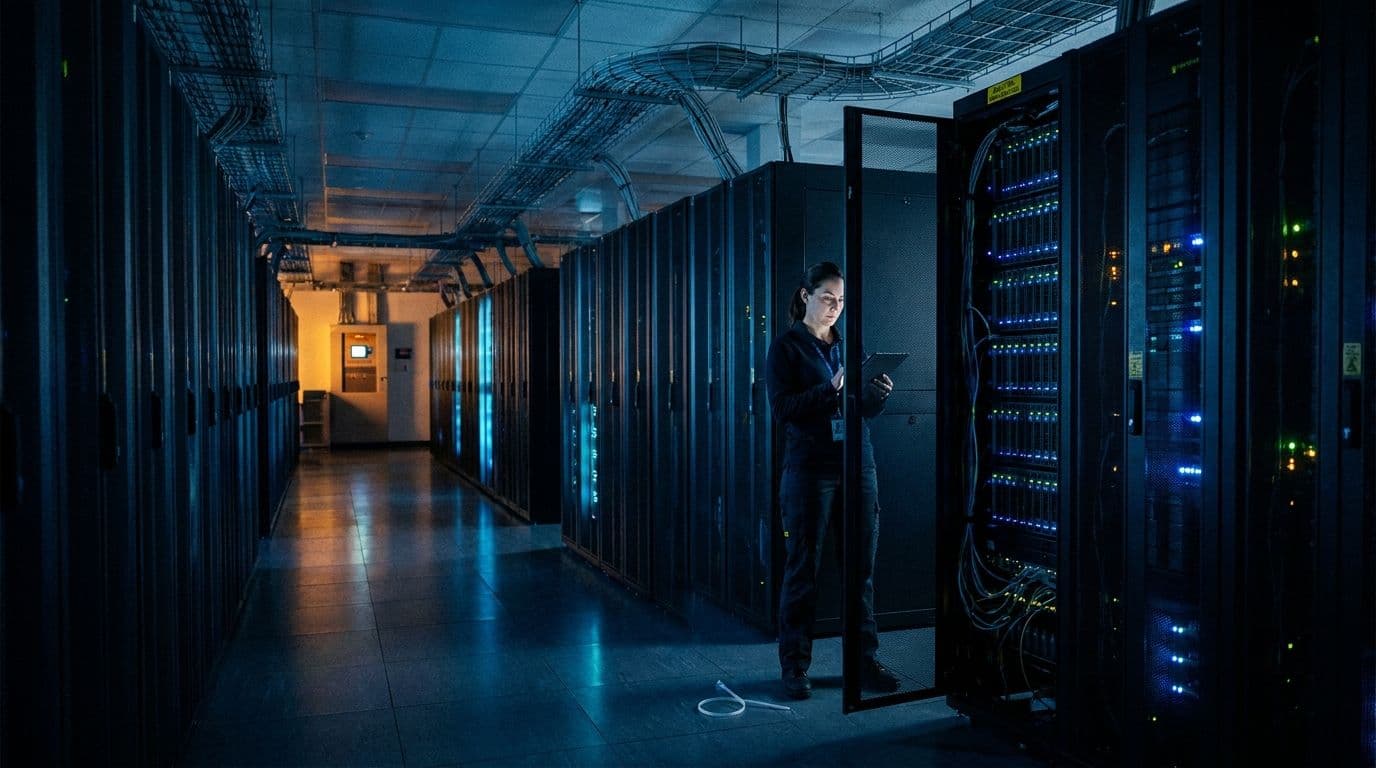
On May 6, 2026, Anthropic announced it had signed a deal to use SpaceX's Colossus 1 data center in Memphis, Tennessee — 300 megawatts of capacity, 220,000-plus NVIDIA GPUs — available within one month. The same facility was built by Elon Musk's xAI for its Grok models. A direct Claude competitor.
The headline announcement for users was straightforward: Claude Code's five-hour rate limits were doubled for Pro, Max, Team, and Enterprise plans. Peak-hour throttling was eliminated for Pro and Max. Claude Opus API limits were raised considerably across all tiers.
The context behind that announcement is considerably more complicated — and more instructive for anyone making multi-year bets on AI tools for their finance team.
Why Anthropic Needed SpaceX's Data Center
Anthropic grew 80 times last quarter by its own account. That is not a typo. The company is burning through compute at a rate its existing infrastructure cannot match, and the larger agreements it has signed — up to 5 gigawatts with Amazon, 5 gigawatts with Google and Broadcom beginning 2027, $30 billion in Azure capacity with Microsoft and NVIDIA — have not fully ramped yet.
Colossus 1 is a bridge. It gives Anthropic immediate access to a massive GPU cluster while it waits for the purpose-built capacity to come online. The deal is framed as temporary — a stopgap to prevent the rate-limit and availability problems that have frustrated enterprise users and, according to multiple developer accounts, cost Anthropic business to competitors with more headroom.
The practical result for Claude Code users was immediate and welcomed. Developers who had been hitting the 5-hour limit as a daily ceiling described it as "the single biggest quality-of-life improvement in months." The peak-hours reduction had been the source of particular frustration — models degrading precisely when US-based teams were most actively using them.
The Part Everyone Noticed: Musk's Reversal
In February 2026, Elon Musk called Anthropic "misanthropic and evil" and said it "hates Western civilization." In May 2026, he announced on X that he had "spent a lot of time with senior members of the Anthropic team" and was "impressed," adding: "No one set off my evil detector. So long as they engage in critical self-examination, Claude will probably be good."
The reversal was noticed by everyone. The XDA-Developers headline captured the ambient bewilderment: "Anthropic is doubling Claude Code's hourly rate limits, removing peak hours, and working with SpaceX for some reason."
The "for some reason" is doing a lot of work in that sentence. There are at least three reasons worth examining — none of them flattering to anyone involved, and all of them relevant to how you think about AI vendor stability.
The competitive conflict. Colossus 1 was built for Grok. xAI and Anthropic are direct competitors in the enterprise AI market. Anthropic is now paying to run its workloads on infrastructure built for the product it is trying to beat. Commentator Ramez Naam described the underlying dynamic on X: "SpaceX didn't need to buy xAI to become a space data center provider. The acquisition was a bailout of xAI." Anthropic's compute dollars are, in part, subsidizing a competitor's balance sheet.
The political calculus. The US Department of Defense blacklisted Anthropic as a "supply chain risk" in March 2026. Anthropic filed suit to reverse that designation. The litigation is ongoing. Signing a business deal with Musk-controlled infrastructure while that lawsuit is in progress — at a moment when Musk's alignment with the Trump administration is well-documented — struck many observers as a strategic signal, not just a compute transaction. Whether that signal helps or hurts Anthropic's legal position is genuinely unclear.
The environmental problem. Colossus 1 runs on natural gas turbines installed by xAI's subsidiary MZX Tech without federal permits. Memphis residents have active protests over the air quality impact. Environmental and AI safety advocates criticized Anthropic — a company that markets itself heavily on responsible AI development — for choosing to run workloads on infrastructure with an ongoing permitting dispute and documented community harm. This is not a theoretical concern: it is an active regulatory and reputational exposure for any organization whose vendor is Anthropic.
What the Infrastructure Picture Actually Looks Like
Setting aside the politics, the infrastructure trajectory Anthropic is on is genuinely significant — and it matters for any finance team evaluating AI tools on a three-to-five year horizon.
Here is the compute pipeline Anthropic has announced or confirmed:
- SpaceX Colossus 1 (Memphis): 300MW, 220,000+ GPUs — available now, bridge capacity
- Amazon: up to 5 gigawatts of dedicated capacity — ramping through 2026
- Google and Broadcom: 5 gigawatts — beginning 2027
- Microsoft and NVIDIA: $30 billion Azure capacity
- Fluidstack: $50 billion commitment
That is not a company running out of runway. It is a company that temporarily outgrew its existing infrastructure while negotiating some of the largest compute agreements in the industry's history. The SpaceX deal is the bridge that keeps the lights on while those agreements ramp.
Goldman Sachs CIO Marco Argenti framed the broader moment in a way that applies directly here: "This is the first time that instead of buying infrastructure, you can actually buy intelligence." The compute race is the infrastructure race. Whoever has the most reliable, lowest-latency, highest-capacity compute wins the enterprise AI market. That is what all of this is about.
The IPO Signal
Multiple financial press sources have framed the compute scale-up in the context of a rumoured Anthropic IPO, potentially as early as June 2026. The logic is straightforward: an AI company going public needs to demonstrate it can serve enterprise demand at scale without the rate-limit and availability problems that have defined the past eighteen months.
The FactSet sell-off after the finance agents announcement, the SpaceX compute deal, the doubling of rate limits, and the aggressive data partnership announcements all land in the same window. Whether that timing is deliberate or coincidental, the effect is the same: Anthropic is building a public narrative of infrastructure scale and enterprise readiness at the precise moment it would need one for an IPO.
For a finance leader evaluating AI tools, that matters. A vendor approaching a public offering has strong incentives to maintain enterprise reliability and minimize the kind of availability failures that generate negative press. It also has incentives to sign and retain large enterprise accounts, which translates to genuine leverage for procurement conversations.
What Finance Teams Should Actually Take From This
The temptation when reading about AI infrastructure deals is to treat them as background noise — interesting for tech insiders, irrelevant to the actual work of running a finance function. That is a mistake. The infrastructure layer is where reliability lives, and reliability is the only thing that matters when AI touches financial reporting.
Rate limit improvements are real and immediate. If your team uses Claude for financial research, model building, or document analysis, the doubled rate limits and elimination of peak-hour throttling reduce the friction that was making enterprise adoption difficult. This is the most directly actionable part of the announcement.
Vendor infrastructure risk is now a procurement question. The fact that Anthropic's current capacity runs partly on a competitor's data center, with active environmental complaints and an ongoing federal lawsuit in the background, is the kind of vendor risk that belongs in a procurement checklist. Not as a reason to avoid Anthropic — the compute pipeline behind Colossus 1 is substantial — but as a variable to monitor and revisit quarterly.
The reliability trajectory is positive. The honest assessment is that Anthropic's infrastructure position in Q3 2026 will be materially better than it is today. The Amazon and Google capacity agreements represent a step-change in reliability that removes the current bridging risk. If your timeline for AI adoption in your finance function is six to twelve months, the infrastructure concerns are shorter-lived than the adoption curve.
Environmental and political exposure is real. For organizations with ESG commitments, supply chain transparency requirements, or government contracting obligations, the Colossus 1 situation is worth documenting as a vendor risk item. It is not hypothetical — it is an active regulatory dispute involving the physical infrastructure your AI vendor is using today.
The Broader Pattern: AI Infrastructure Is Geopolitical Now
The SpaceX deal is one data point in a pattern that is becoming impossible to ignore: AI infrastructure decisions are geopolitical decisions. The DoD blacklisting Anthropic, Musk's political alignment shaping infrastructure access, the EU AI Act governing model deployment, the PCAOB watching AI use in audits — none of this is happening in isolation.
For a finance leader, this means the AI tool selection decision is no longer purely a technology decision. It carries vendor risk, regulatory risk, political risk, and reputational risk that did not exist three years ago. That is not a reason to avoid AI tools. It is a reason to evaluate them with the same rigor you apply to any other significant operational dependency.
Anthropic CEO Dario Amodei acknowledged the uncertainty plainly when asked about the broader impact of the company's growth: "The cone is even wider than I thought. I don't think anyone knows." That honesty is refreshing and useful. Nobody — including the people building these systems — fully knows where this lands.
What finance teams can control is how they build their dependency on it. The organizations that will navigate this well are the ones that treat AI as a layer in a governed stack — with clear accountability for outputs, documented human review checkpoints, and a data foundation that does not depend on any single vendor getting everything right.
Where We Come In
Lets Viz runs Managed Power BI for SaaS finance teams — SLA-backed refresh monitoring, a documented hours bank for model work, and strategic BI advisory that includes AI governance as a first-class deliverable.
The AI tools your finance team uses are only as reliable as the data layer underneath them. A well-governed Power BI environment — with validated measures, monitored refreshes, and documented change control — is what separates an AI-assisted finance function that earns trust from one that creates new categories of error.
When Anthropic's infrastructure is excellent and when it has a bad quarter, your reporting still needs to be right on Monday morning. That is what we build.