AI Services and Consulting for Finance and Healthcare Leaders
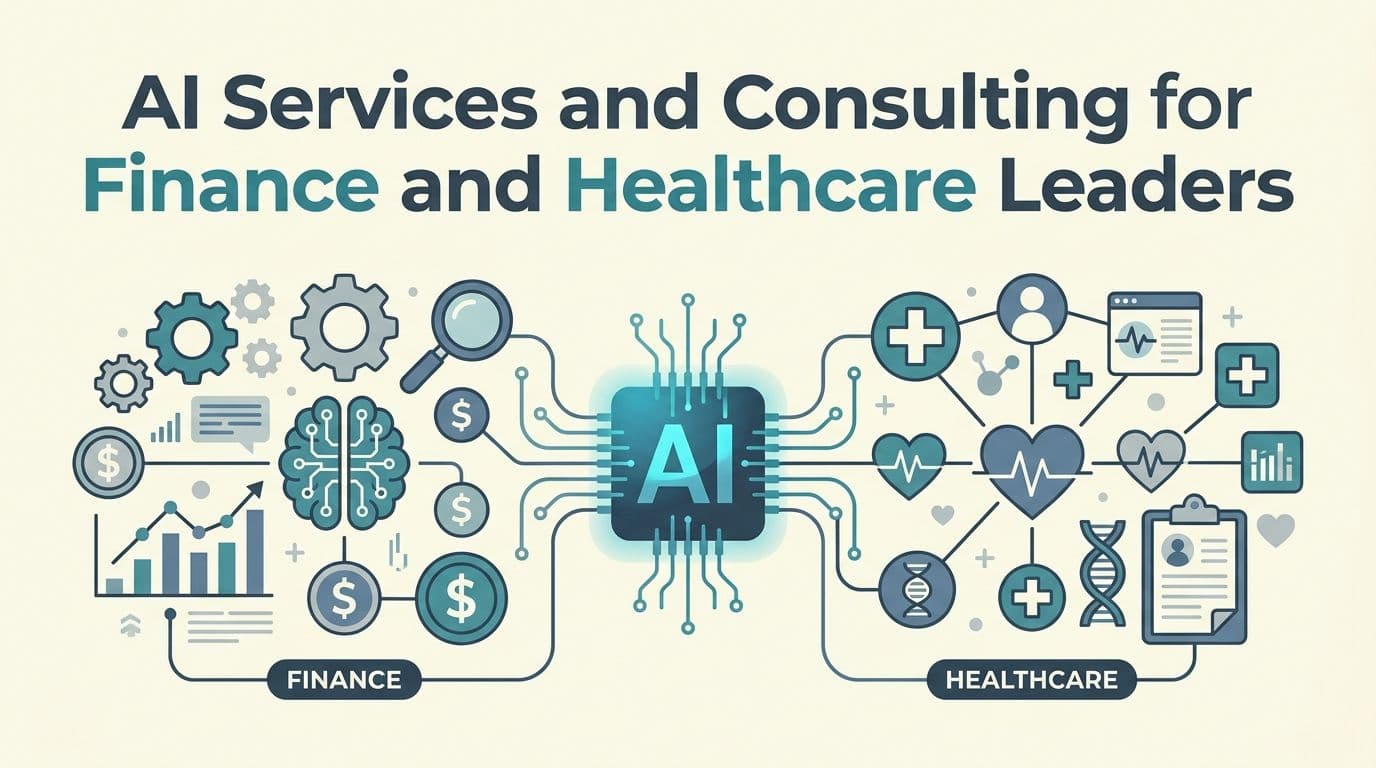
Artificial intelligence (AI) is no longer a future-facing concept for most enterprises - it is the operating system behind fraud detection, clinical decision support, regulatory compliance, and customer engagement. For business leaders in financial services and healthcare, the question has shifted from "should we invest in AI?" to "how do we implement it responsibly and at scale?"
That is where AI services and consulting firms play a critical role. A well-chosen partner brings not just technical depth but sector-specific expertise - understanding the difference between optimizing a trading desk model and tuning a diagnostic imaging algorithm. This guide breaks down what to expect from a credible engagement, where the real value lies, and how to measure it.
What Is AI Analytics Consulting?
AI analytics consulting is a professional service in which a specialized team helps an organization identify, design, deploy, and govern AI-powered data solutions that answer specific business questions. In plain terms: a consulting partner brings the technical skills, sector knowledge, and project structure that most internal teams lack when moving from raw data to reliable, production-grade intelligence.
Scope typically covers four layers:
Strategy and use-case prioritization - identifying which problems are worth solving with AI, given your data maturity and business goals
Data infrastructure - building or fixing the pipelines, warehouses, and governance controls that AI models depend on
Model development and validation - training, testing, and documenting the algorithms that generate predictions or decisions
Deployment and monitoring - putting models into production and keeping them accurate over time
Typical deliverables from an engagement include a use-case roadmap, a data readiness assessment, one or more validated machine learning models, MLOps infrastructure, and documentation packages required for regulatory review.
The decision trigger - the moment most organizations should seek external help - is when internal analytics teams have the data but lack the specialized ML engineering or sector-specific compliance experience to move a use case from prototype to production. Budget constraints, a stalled internal pilot, or an upcoming regulatory exam are the most common catalysts.
For regulated industries, AI analytics consulting is distinct from general data consulting in one critical way: every model must be explainable, auditable, and built against a documented risk framework from the start, not retrofitted after deployment. That distinction is what separates a durable AI investment from a costly proof-of-concept that never reaches production.
Why Finance and Healthcare Are Leading AI Adoption
According to McKinsey's 2026 State of AI report, financial services and healthcare rank among the top three sectors by AI adoption rate, with over 87% of financial services firms reporting at least one AI use case in production. The pressure is structural: margin compression, regulatory complexity, talent shortages, and rising customer expectations are converging simultaneously.
In financial services, AI drives value across the full value chain - from underwriting and credit scoring to anti-money laundering (AML) surveillance and wealth management personalization. In healthcare, AI accelerates clinical documentation, prior authorization workflows, radiology analysis, and population health management.
Both sectors share a common constraint: they are heavily regulated. Financial institutions navigate SOX compliance, Basel III capital requirements, and SEC model risk guidelines. Healthcare organizations operate under HIPAA, state privacy laws, and CMS reimbursement rules. Any AI implementation must be explainable, auditable, and defensible - not just accurate. Regulatory alignment is not a post-deployment checkbox; it is a design requirement from day one.
Core AI Services Transforming Financial Services
Machine learning models for credit risk have reduced loan default prediction error by up to 25% compared to traditional scorecard models, according to 2026 research published by the Federal Reserve Bank of Philadelphia. That improvement translates directly into better capital allocation and reduced loan losses.
The AI services that financial firms typically engage consultants for include:
Fraud Detection and AML Surveillance
Real-time transaction monitoring using graph neural networks and anomaly detection models can flag suspicious patterns that rule-based systems miss. Modern AML platforms process millions of transactions per second and surface only the highest-risk alerts for human review - cutting false positive rates by 30 to 60% in documented deployments. FinCEN's 2026 AML modernization guidance explicitly endorses AI-driven transaction monitoring as a complement to rules-based programs, giving compliance teams a regulatory green light to accelerate adoption that many had been waiting for.
Model Governance and Regulatory Validation
Regulators increasingly scrutinize AI models used in credit and underwriting decisions. The OCC's Model Risk Management guidance (SR 11-7) requires financial institutions to validate, document, and monitor every model in production. In 2026, the CFPB extended its adverse action explanation requirements to AI-driven credit models, making model explainability a legal obligation rather than a best practice - any denial or adverse pricing action must now be traceable to specific, human-intelligible factors. AI consulting engagements in this space typically include model validation frameworks, disparate impact testing, and ongoing drift monitoring - all essential for exam readiness.
Back-Office Automation and Intelligent Document Processing
Intelligent document processing (IDP) tools extract structured data from loan applications, trade confirmations, and regulatory filings - reducing manual processing time by 70 to 80% in documented deployments. The compounding effect is significant: a regional bank that deployed IDP across its commercial loan origination workflow cut end-to-end processing time from 14 days to under 4, while reducing document keying errors by 90% - a throughput gain that would have required doubling the operations headcount to achieve manually. Combined with robotic process automation (RPA), these tools allow operations teams to redeploy headcount toward higher-value work.
AI Consulting in Healthcare: From Compliance to Care
Healthcare AI consulting operates at the intersection of clinical workflow, data infrastructure, and regulatory compliance. A 2026 report from the American Hospital Association found that hospitals using AI for clinical decision support reduced preventable readmissions by an average of 20% - a metric that directly affects CMS value-based payment scores and hospital star ratings.
Key healthcare AI service areas include:
Clinical Documentation and Revenue Cycle Optimization
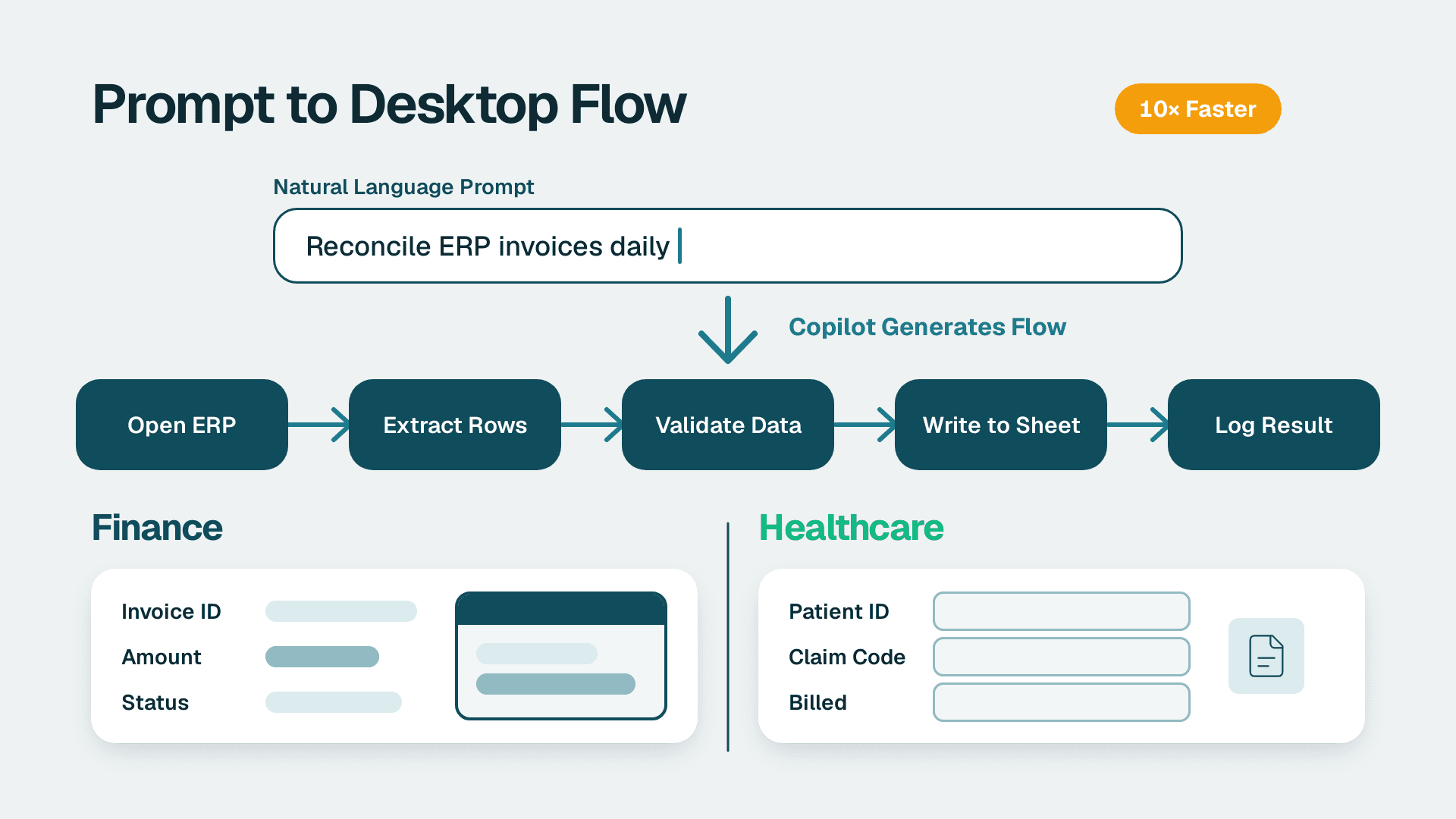
Ambient AI scribing tools capture physician-patient conversations and generate structured SOAP notes in real time, reducing documentation burden by 2 to 3 hours per physician per day. Accurate coding directly affects reimbursement under ICD-10 and DRG payment systems, making this one of the highest-ROI AI applications in the sector.
Predictive Analytics for Population Health
Payers and integrated delivery networks (IDNs) use AI to identify high-risk patients before they generate acute utilization. Models trained on claims data, EHR records, and social determinants of health (SDOH) can flag patients who are 6 to 12 months from a high-cost event - enabling proactive care management that reduces both spending and adverse outcomes. In one documented 2025 deployment at a mid-sized Medicaid managed care organization, a risk stratification model reduced avoidable emergency department visits by 18% within 12 months, generating $4.2M in avoided costs against a $900K implementation budget - a return profile that has become representative of mature population health AI programs.
HIPAA-Compliant Data Infrastructure
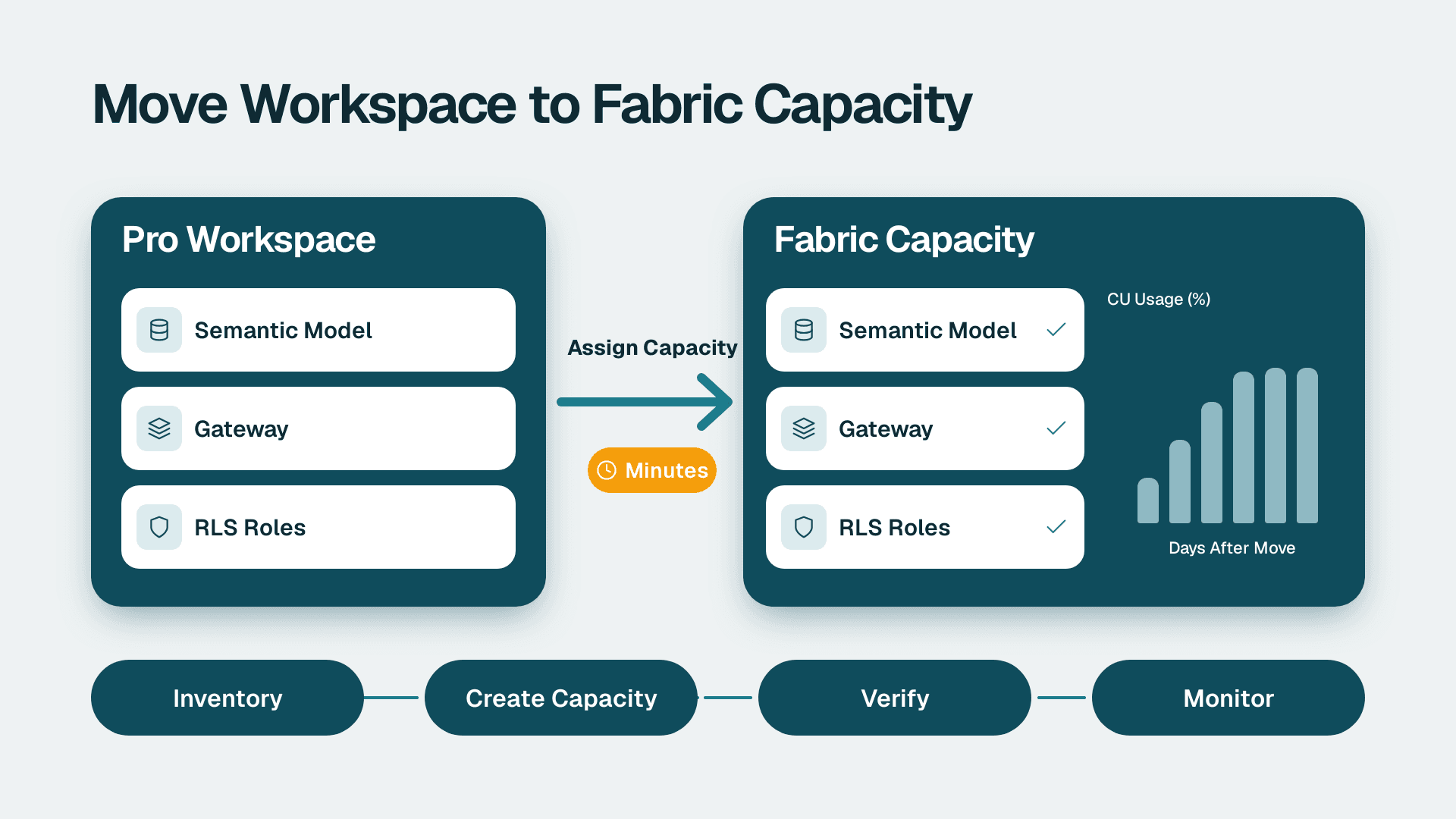
Before any AI model can be trained on patient data, the underlying data architecture must meet HIPAA's technical safeguard requirements - encryption at rest and in transit, audit logging, role-based access controls, and Business Associate Agreements (BAAs) with all vendors. AI consulting engagements in healthcare often begin here, building the compliant data foundation that makes downstream modeling both possible and defensible during OCR audits.
Building an AI Roadmap: What Good Consulting Looks Like
The difference between an AI initiative that delivers ROI and one that stalls in pilot purgatory is usually not the algorithm - it is the implementation strategy. According to Gartner's 2026 AI deployment benchmark, 85% of AI projects fail to move from pilot to production without dedicated program management and change management support. Selecting a consulting partner who addresses both the technical and organizational dimensions is non-negotiable.
High-quality AI consulting engagements follow a structured model:
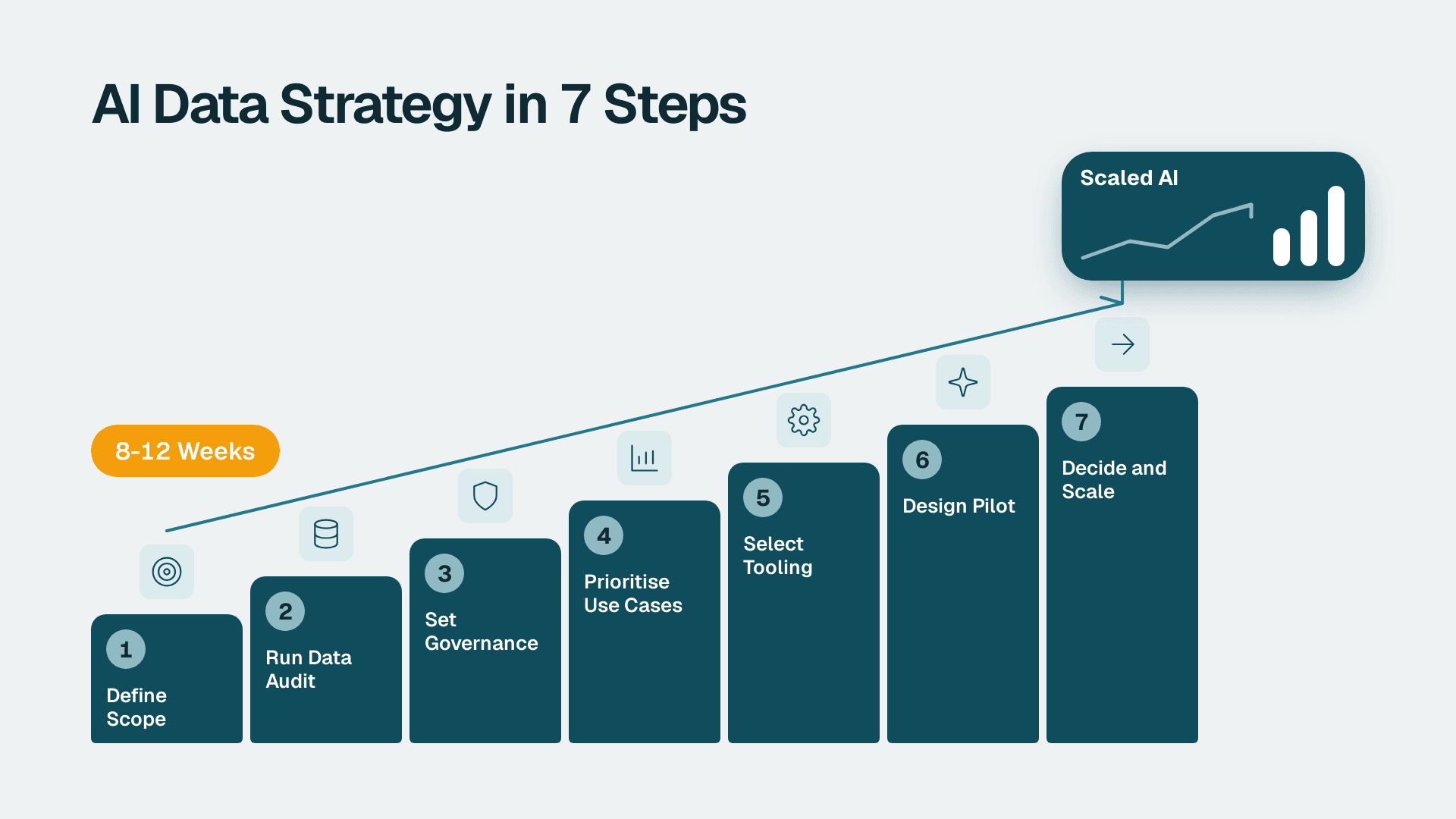
1. Discovery and Use Case Prioritization - Assess the client's data maturity, technology stack, and business objectives to identify the 2 to 3 AI use cases most likely to generate measurable value within 6 to 12 months.
2. Data Readiness Assessment - Evaluate data quality, completeness, governance, and compliance posture. For healthcare clients, this includes a HIPAA gap analysis; for financial clients, it includes SOX data lineage and model documentation requirements.
3. Proof of Concept Development - Build a scoped, time-boxed prototype to validate the core hypothesis before committing full engineering resources.
4. Production Deployment and MLOps - Move from prototype to production with CI/CD pipelines, model monitoring, automated retraining triggers, and rollback procedures.
5. Change Management and Training - Adoption is the final mile. AI tools fail when end users do not trust or understand them. The best engagements include structured training, workflow redesign, and a continuous feedback loop.
Measuring ROI on AI Investments
Return on investment for AI is real, but it requires deliberate measurement frameworks established before implementation begins. A 2026 Deloitte survey found that enterprises with defined AI ROI frameworks in place before project start were 2.3x more likely to report significant value from their AI investments compared to those who measured outcomes after the fact.
Common ROI metrics by sector:
Financial services: reduction in fraud losses (dollars), decrease in AML false positive rate (%), improvement in credit default prediction accuracy (basis points of loss rate), straight-through processing rate for back-office operations
Healthcare: physician documentation time saved (hours per week), reduction in prior authorization denial rate (%), readmission rate improvement (%), revenue cycle acceleration (days to payment)
Beyond financial metrics, responsible AI programs in regulated industries track fairness, explainability, and model drift as operational KPIs. Regulators in both sectors are increasingly requesting documentation of these indicators as part of examination and audit processes. Building that instrumentation from the start - rather than retrofitting it - is one of the clearest signals of a mature consulting engagement.
---
Building an AI strategy that holds up under regulatory scrutiny, scales beyond the pilot, and delivers measurable business outcomes requires more than a capable algorithm - it requires the right advisory partnership. Lets Viz helps financial services and healthcare organizations design, deploy, and govern AI at scale, with a data infrastructure built for compliance from day one.
Explore our Analytics Services to schedule a discovery call with our team.