AI Consulting Services for Financial Advisors: 2026 Guide

Financial advisory has always been an information-dense profession. But the gap between firms that use data well and those that do not is widening faster than at any point in recent memory. AI consulting services for financial advisors have moved from a speculative line item to a strategic priority - one that CIOs, finance directors, and data team leads at mid-market firms are being asked to evaluate right now.
This guide cuts through the noise. It explains what AI consulting actually delivers for financial advisory practices, where the meaningful ROI lives in 2026, what to demand from a consulting partner, and how to avoid the implementation traps that derail most engagements.
---
Why Financial Advisors Need Specialized AI Consulting
Generic AI tooling is not the same as AI built for financial services workflows. A financial advisor's operational reality involves regulatory compliance under SEC and FINRA frameworks in the US, IIROC and OSC obligations in Canada, fiduciary documentation requirements, client portfolio sensitivity, and audit trails that must survive scrutiny. Off-the-shelf automation applied naively to these environments creates liability, not efficiency.
This is the core argument for specialized AI consulting services. A competent consulting partner brings three things a technology vendor alone cannot:
- Domain knowledge - understanding that a model recommendation touching a retirement portfolio carries different risk thresholds than a CRM automation workflow.
- Integration depth - connecting AI outputs to the custodial platforms, portfolio management systems, and compliance tools that financial advisors actually use.
- Governance architecture - building the audit logs, explainability layers, and human-override controls that regulators will eventually ask to see.
For mid-market firms operating without a large internal data engineering team, this expertise is not optional. It is the difference between an AI deployment that creates defensible value and one that creates a compliance incident.
---
The Four Highest-Value Use Cases in 2026
Not every AI application is equal. The following four use cases represent where consulting engagements are generating measurable, repeatable returns for financial advisory practices in the US and Canada right now.
1. Automated Client Reporting and Portfolio Narratives
Client reporting is among the most labor-intensive recurring tasks in wealth management. Advisors and their operations staff spend significant time each quarter assembling performance summaries, benchmark comparisons, and commentary that is largely templated. AI-assisted generation - properly governed and reviewed - can compress this cycle dramatically.
The consulting work here involves connecting portfolio data sources to a language model layer, building review-and-approval workflows that keep a human in the loop, and ensuring the outputs meet plain-language disclosure standards. Done well, advisors reclaim hours per client per quarter.
2. Predictive Analytics for Client Retention
Churn prediction is underutilized in financial advisory. Firms collect behavioral signals - login frequency, service call volume, life event disclosures, asset movement patterns - that, when modeled together, surface clients at elevated risk of leaving before they actually do.
AI consulting services build these propensity models and connect them to CRM alerts so relationship managers can act proactively. The downstream value compounds: retaining a high-net-worth client for an additional three to five years has asymmetric revenue impact relative to acquisition cost.
3. Compliance Monitoring and Anomaly Detection
Regulatory surveillance is a natural AI application. Pattern recognition models can flag communications, transaction sequences, or portfolio construction decisions that deviate from established norms - giving compliance teams a prioritized review queue rather than requiring exhaustive manual review.
This is especially relevant post-2025 as both SEC and Canadian securities regulators have signaled heightened scrutiny of AI-assisted advisory recommendations. Firms that have AI monitoring AI create a defensible governance posture. Those that do not are exposed.
4. Financial Forecasting and Scenario Modeling
Traditional forecasting in advisory practices is often static - a point estimate updated quarterly. AI-powered scenario modeling allows advisors to run probabilistic forecasts across macroeconomic variables, simulate client-specific outcomes under stress scenarios, and present clients with dynamic range projections rather than single-number predictions.
For finance directors evaluating AI investments, this use case ties directly to the key financial KPIs that advisory practices already track - revenue per client, AUM growth, and forecast accuracy. When AI-assisted forecasting demonstrably improves those numbers, the ROI case closes itself.
---
What Good AI Consulting Looks Like in Practice
The consulting market is crowded with vendors selling AI transformation at the proposal stage but delivering dashboard demos that do not connect to actual workflows. Here is what a rigorous engagement should include.
Discovery and Data Audit
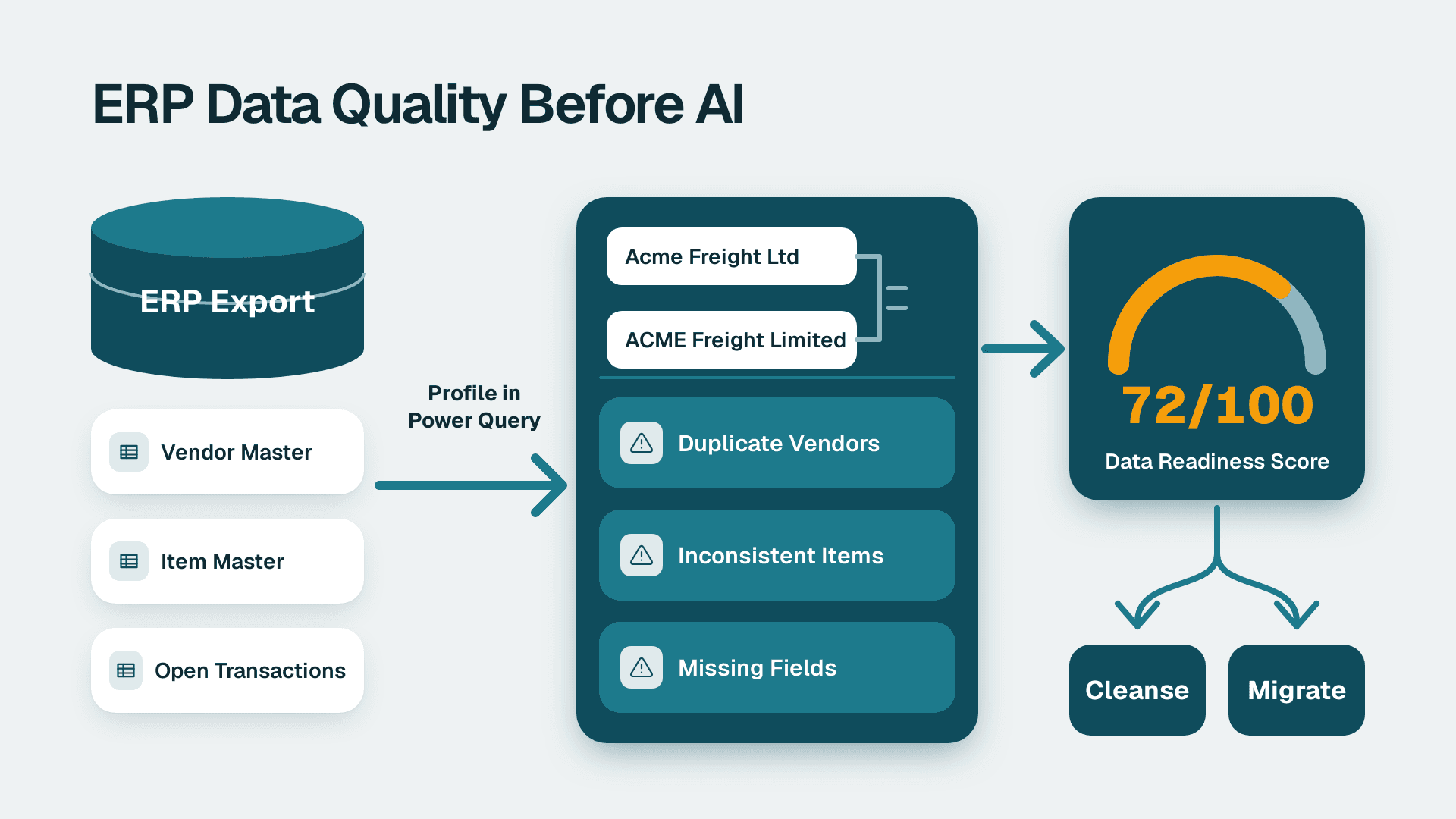
No credible engagement begins with tool selection. It begins with an honest assessment of your data environment. Where does client data live? How clean is it? What are the integration constraints imposed by your custodial platform? What regulatory obligations govern data residency and retention?
A consulting partner who skips this phase is selling you a solution before understanding your problem.
Use Case Prioritization
Not every AI opportunity is worth pursuing in year one. A good consulting engagement produces a prioritized roadmap that sequences use cases by effort, risk, and expected return - not by what happens to be technically interesting. This is the deliverable that finance directors should scrutinize most carefully before approving budget.
Governance and Explainability Design
AI governance is not a compliance checkbox. It is the mechanism that keeps AI-assisted advice defensible when a client complains or a regulator inquires. Consulting work in this area includes model documentation, output explainability requirements, escalation protocols, and periodic model performance reviews.
For practices operating under fiduciary standards, this layer is non-negotiable. The AI risk checklist framework that finance teams are applying to their analytics platforms applies equally to AI advisory tools.
Integration and Change Management
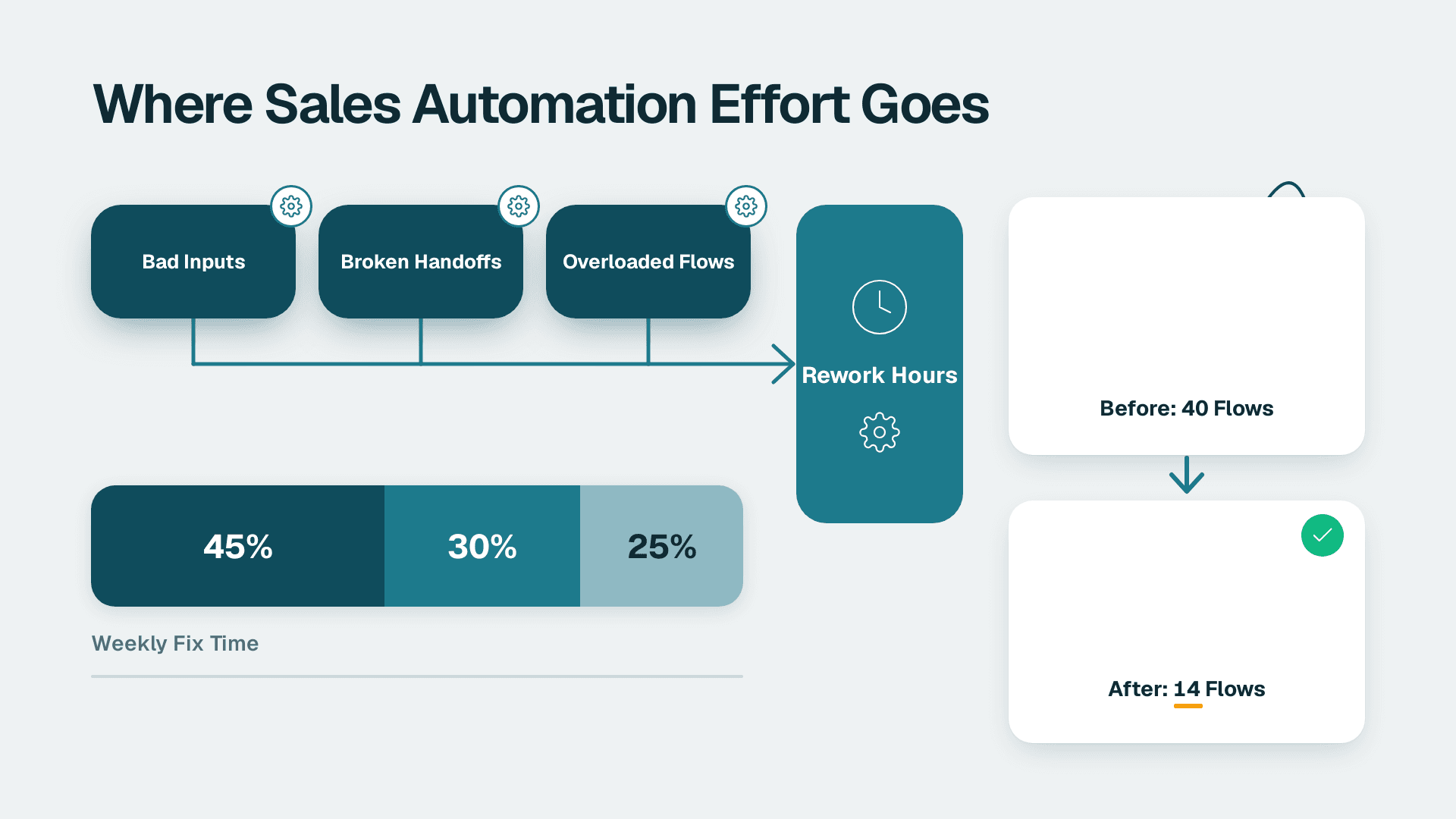
Technology integration is the tactical layer. Change management is where deployments fail. Financial advisors are often skeptical of automation that touches client-facing outputs, and for legitimate reasons. A consulting engagement that delivers the technology without investing in advisor adoption - training, workflow redesign, feedback loops - will underperform its potential.
---
The Data Infrastructure Question
AI consulting for financial advisors sits on top of a data infrastructure layer that many mid-market firms have not yet matured. Before an advisory practice can derive value from predictive modeling or AI-generated narratives, it needs reliable, accessible, well-governed data.
This is where business intelligence infrastructure becomes a prerequisite, not a parallel track. Firms that have invested in structured data environments - unified client data, clean portfolio feeds, integrated CRM and financial planning data - move through AI consulting engagements faster and at lower cost than those starting from raw, siloed sources.
If your practice is earlier in this journey, understanding business intelligence fundamentals before scoping an AI engagement will save significant rework downstream. The sequencing matters: get your data house in order, then layer AI on top of it.
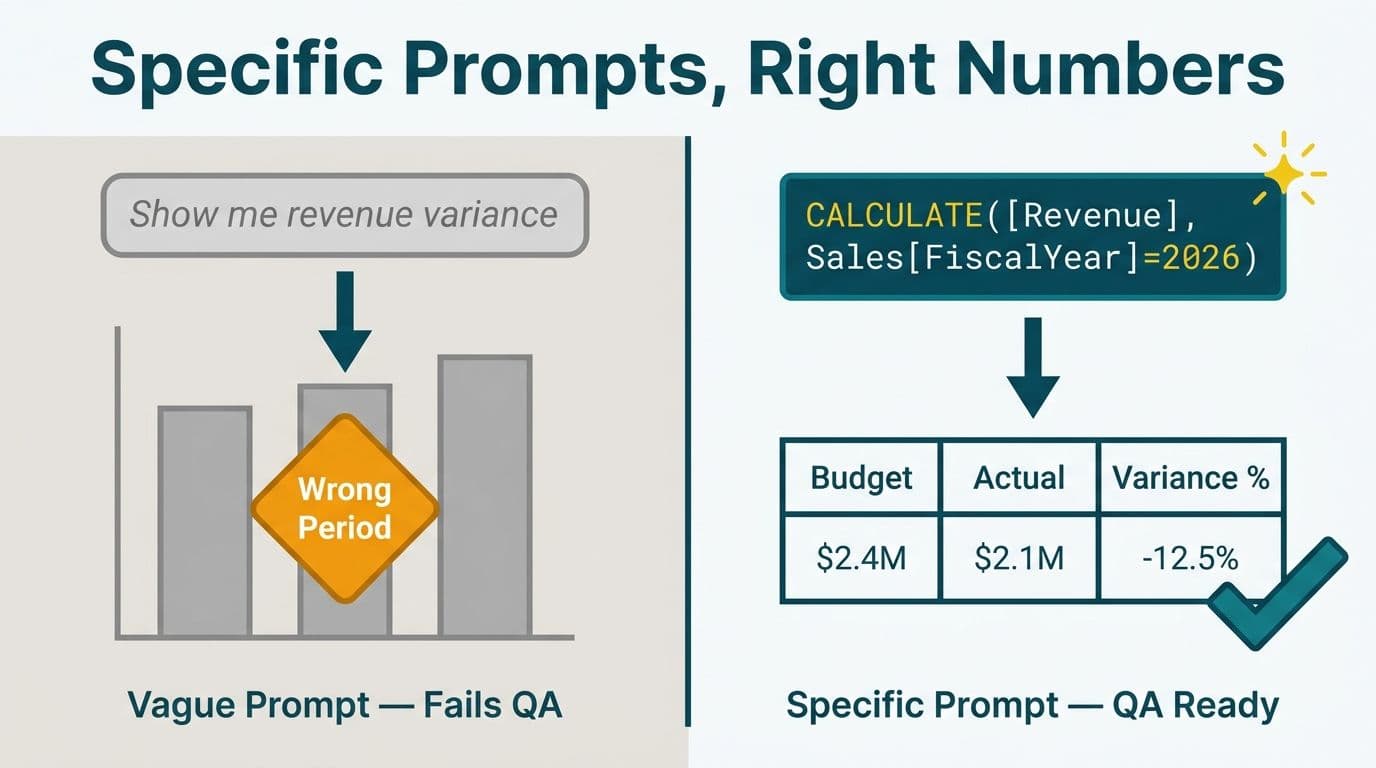
For firms already using Power BI as their analytics backbone, the path to AI-assisted financial reporting is shorter than many realize. Recent AI features built into the platform allow finance teams to generate natural-language summaries, surface anomalies automatically, and run scenario comparisons without additional model infrastructure - provided the underlying data model is clean and well-structured.
---
Evaluating AI Consulting Partners: Five Questions to Ask
Not all consulting firms bring the same depth to financial services AI. Before signing an engagement, ask these questions:
1. What financial services regulatory frameworks have you worked within? Expect specific answers about SEC, FINRA, IIROC, or OSC compliance requirements - not general references to regulated industries.
2. Can you show us a use case where AI output fed directly into a client-facing deliverable? Implementation experience with client-facing AI is meaningfully different from internal analytics work.
3. How do you handle model drift and performance degradation? AI models degrade over time as market conditions and client behaviors shift. A credible partner has a defined process for monitoring and retraining.
4. What does your governance documentation look like? Ask for a sample model card or AI system documentation deliverable. If they cannot produce one, governance is not part of their practice.
5. Who owns the models and data pipelines after the engagement ends? Avoid arrangements that create perpetual dependency. You should own your AI infrastructure, with the option to engage ongoing support on your terms.
---
ROI Expectations and Timeline Reality
AI consulting engagements in financial advisory typically fall into two categories: quick-win automations that generate returns within the first two to three months, and strategic capability builds that take six to twelve months to reach full operational maturity.
Quick wins - automated reporting, CRM data enrichment, meeting summary generation - are worth pursuing in parallel with longer-horizon work. They generate early stakeholder confidence and fund political capital for the harder transformation work.
Strategic builds - churn prediction models, compliance surveillance systems, AI-assisted portfolio construction - require a longer runway but generate more durable competitive differentiation.
For CIOs and data team leads scoping an initial engagement, a realistic first-year objective is demonstrable efficiency gains in one or two administrative workflows, a validated data infrastructure baseline, and a production-ready prototype of one predictive or generative AI use case. That is a credible foundation. Promises of enterprise-wide AI transformation in ninety days are not.
It is also worth evaluating the ROI framework for AI automation before you begin, so you have a consistent method for measuring whether the engagement is delivering against its business case.
---
The Competitive Reality for Mid-Market Advisory Firms
Large wirehouse firms and the major digital advisory platforms have been investing in AI infrastructure at scale for several years. The risk for mid-market advisory firms is not that AI will replace advisors - the evidence does not support that thesis - but that firms without AI-assisted capabilities will find themselves at a meaningful service and efficiency disadvantage relative to competitors who have made the investment.
The advisors who thrive in this environment will be those who use AI to do more of what only a human advisor can do: build trust, navigate complexity, and provide judgment under uncertainty. The firms that survive and grow will be the ones that give their advisors the AI infrastructure to make that possible.
---
If your practice is ready to move from evaluation to implementation, the right starting point is often a structured analytics and AI readiness assessment. Lets Viz helps mid-market financial services firms build the data infrastructure and AI capabilities that translate into measurable business outcomes. Explore our full data analytics and AI consulting services to understand how we approach engagements in financial services and healthcare - or speak with our team directly about where your firm stands today.