Ore Processed
2,847 t/h
Current ore throughput rate through primary crusher and mill circuit
▲ +3.5% above 2,750 t/h target
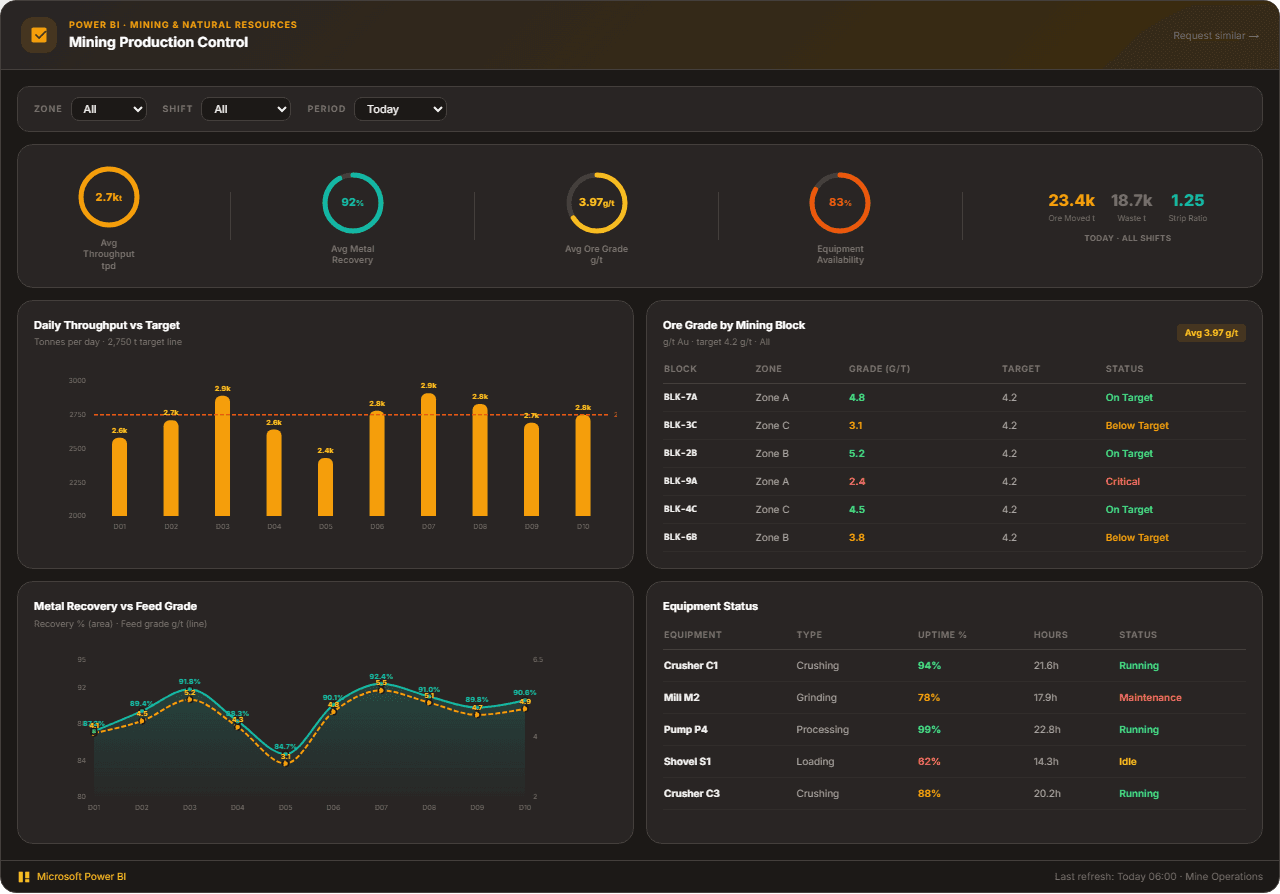
Real-time ore throughput tracking, block-level grade variance analysis, and metallurgical recovery monitoring — built to maximize mill feed quality, reduce dilution, and surface equipment availability issues before they impact production targets.
Powered by modern analytics tools including
Power BI, Tableau, Zoho and Looker.
Trusted by teams across 15+ countries
Real impact, clearly measured. These KPIs show the tangible outcomes of data-informed strategy.
2,847 t/h
Current ore throughput rate through primary crusher and mill circuit
▲ +3.5% above 2,750 t/h target
91.3%
Metallurgical recovery of gold through the CIL/CIP circuit
▲ +0.7pp vs prior month
8.2%
Percentage of waste rock mixing with ore in the mining blocks
▲ -1.4pp vs Q3 average
$43.80
Total operating cost per tonne of ore processed including mining, milling, and G&A
▲ -$1.20 vs last month
How we turned fragmented data into a single source of truth—and what we achieved.
Most mining operations run on 12-hour or 24-hour reporting cycles — shift supervisors compile production numbers manually, metallurgists pull assay data from spreadsheets, and management sees production performance the morning after. By the time grade variance or throughput shortfalls are visible, the production plan has already slipped. Mine management systems, SCADA historians, and lab information systems all have the data, but no single view exists.
We built a Power BI semantic model that integrates your mine management system, SCADA historian, assay lab database, and EAM into a single dashboard — refreshed hourly for shift-level production decisions and daily for management reporting. The model compares actual throughput against the production plan by block, tracks grade variance against the resource model, and monitors equipment availability to flag constraints before they cascade into production losses.
Find answers to common questions about this dashboard and our process.
We support Datamine Studio RM and NPD (via SQL Server or CSV export), Micromine Pitram (via database connector), and Deswik Suite (via export API). For SCADA, we integrate with OSIsoft PI System (AVEVA PI Web API), Ignition (REST API), and Wonderware Historian (ODBC). Assay LIMS integrations include LabWare, STARLIMS, and custom SQL-based lab databases. The integration method is confirmed in the scoping call based on your systems and network security posture.
From Lets Viz
Let's build something extraordinary together. Book a free consultation with our experts today.